You’re cold, hungry, and the wind is starting to push across camp. This is the moment your portable lightweight stove either earns its place in your pack—or ruins your evening. With dozens of ultralight models, different fuels, and bold performance claims for 2026, choosing the right setup can feel harder than the trip itself. This practical Lightweight stove guide cuts through the noise. You’ll learn what actually matters in the field, how different fuel types behave in real conditions, and which stove style fits your trip—whether that’s a fast solo overnighter or a week in shoulder-season mountains.
Table of Contents
- What Makes a Great Portable Lightweight Stove in 2026?
- Portable Lightweight Stove Fuel Types Explained
- 7 Portable Lightweight Stove Options for 2026 (By Use Case)
- How to Choose the Right Stove for Your Trip Style
- Safety, Wind, and Real-World Cooking Tips
- Lightweight Stove Guide: Quick Buyer Checklist
What Makes a Great Portable Lightweight Stove in 2026?
A great stove in 2026 isn’t just the lightest one on a scale. It’s the one that works reliably at dusk, in wind, with tired hands. Weight matters—but stability, fuel efficiency, and ease of setup matter just as much.
Weight vs. Stability: The Hidden Trade-Off
Many ultralight backpacking stoves trim grams by shrinking pot supports. That’s fine for a 750 ml titanium mug. It’s a different story with a 1.5-liter pot full of pasta.
Decision cue: If your pot holds more than 1 liter or you cook for two or more people, check the width of the pot supports and how solidly they lock in place. A slightly heavier burner with broader supports often feels far safer in real use.
For solo freezer-bag meals and simple water boils, an ultralight design makes sense. For actual cooking—sautéing, simmering, stirring—stability should win over pure weight savings.
Boil Time vs. Fuel Efficiency
Fast boil times look impressive in calm lab conditions. Campsites are rarely calm.
Ask yourself: how much fuel are you realistically carrying per night? A stove that sips fuel but takes an extra minute to boil may reduce total pack weight if it allows you to carry less fuel.
On-trail reality: In steady wind, efficiency drops fast. Even the best compact camping stove for windy conditions benefits from a smart wind strategy.
Packability and Setup Time
Does the stove fit inside your pot? Can you assemble it with cold fingers? Can you ignite it in light rain?
If a design requires careful alignment or tiny threaded parts, practice at home. Reviewing different compact camping stove options for 2026 trips can also help you spot designs that prioritize quick, glove-friendly setup. When it’s dark and temperatures are dropping, you want simplicity—not a puzzle.
Portable Lightweight Stove Fuel Types Explained
Choosing the right fuel type is often more important than choosing a brand. Fuel affects cold-weather performance, availability, and how much control you have while cooking.
Canister Stoves (Isobutane/Propane Mix)
These are the most popular canister stove for backpacking setups.
- Pros: Fast setup, clean-burning, lightweight, minimal maintenance.
- Cons: Performance drops in cold temperatures; empty canisters must be packed out and disposed of properly.
Cold-weather tip: In shoulder season, keep your canister warm in a jacket pocket before use. Always bring a backup lighter, even if your stove has push-button ignition.
Liquid Fuel Stoves
These run on refillable fuel bottles and are common for mountaineering and winter use.
- Pros: Reliable in freezing conditions, refillable, strong heat output.
- Cons: Heavier, requires priming, and has a learning curve.
Before a cold-weather trip, practice priming at home. A poorly primed stove can flare up briefly. That’s normal—but only if you know what to expect.
Wood-Burning & Alternative Fuel
A wood burning backpacking stove appeals to minimalist hikers who don’t want to carry fuel.
- Pros: Fuel independence, natural aesthetic, lightweight designs available.
- Cons: Weather-dependent, slower, and subject to fire restrictions.
Always verify local fire regulations before relying on wood. Check current restrictions through the U.S. Forest Service fire restrictions page or the National Park Service campfire safety guidelines. Conditions can change quickly in dry seasons.
7 Portable Lightweight Stove Options for 2026 (By Use Case)
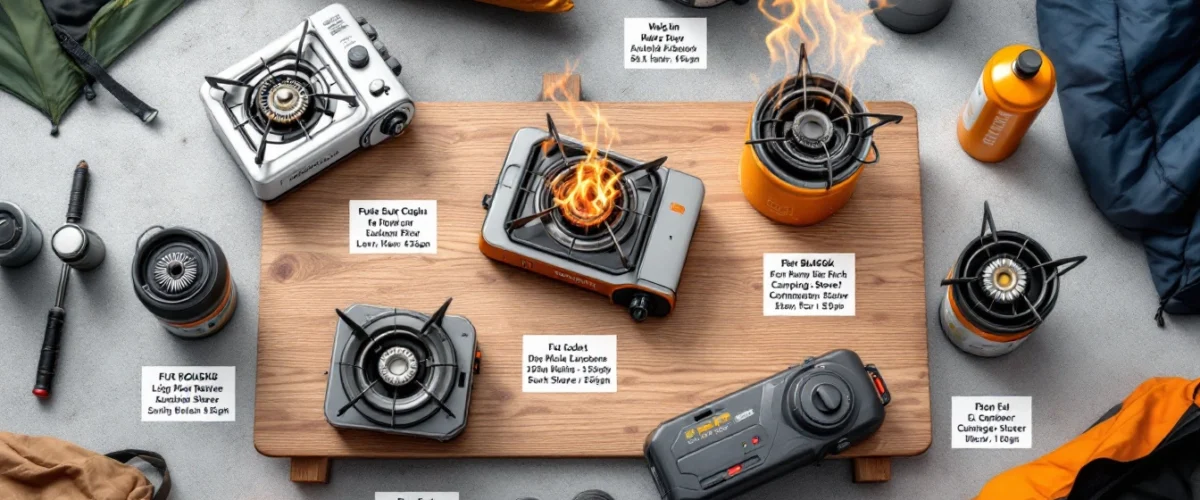
Instead of ranking models, it’s smarter to match stove style to trip type. For side-by-side comparisons, see this compact camping stove guide with 7 top picks for 2026. Here are seven strong categories to consider for 2026.
1. Ultralight Solo Backpacking Stove
These minimalist burners often weigh under 100 grams and screw directly onto a fuel canister.
Best for: thru-hikers and solo trekkers boiling water only.
Trade-off: narrow pot supports and limited simmer control.
2. Integrated Canister System (Jet-Style)
A lightweight camping cooking system that combines stove and heat-exchanger pot.
Best for: fast boils, windy conditions, efficient fuel use.
Heavier than a bare burner, but often more efficient per meal.
3. Budget-Friendly Compact Stove
Ideal for new backpackers testing the waters.
Corners are typically cut in materials and fine simmer control, but reliability can still be solid for simple trips.
4. Cold-Weather Capable Liquid Fuel Stove
Best for: winter camping and high elevations.
Heavier and louder, but dependable below freezing. Practice priming before relying on it in the backcountry.
5. Wood-Gas Backpacking Stove
Appeals to minimalists and long-distance hikers who pass through wooded terrain.
Reality check: after heavy rain, finding dry fuel takes time and patience.
6. Hybrid / Multi-Fuel Adventure Stove
Runs on both canister and liquid fuels, depending on configuration.
Excellent for international travel where fuel types vary. Heavier—but versatile.
7. Minimalist Emergency Backup Stove
Small, simple, and durable.
Best for: day hikes, emergency kits, or as a redundancy on longer expeditions.
Rule: A backup stove should be extremely simple and field-reliable.
How to Choose the Right Stove for Your Trip Style
Weekend Car Camping vs Backpacking
If you’re not carrying it far, weight matters less. You can choose a more stable system that supports bigger pans and real cooking—think eggs, bacon, or pancakes.
Backpacking? Every gram counts. Focus on weight and packability first, but don’t ignore pot stability.
Group Size and Pot Capacity
Cooking for three or more people on a tiny ultralight burner gets frustrating fast.
If your pot is wide and full, make sure the burner distributes heat evenly and sits solidly on the ground.
Climate & Terrain Factors
Wind exposure, altitude, and temperature all play a role. Check manufacturer guidance for altitude performance. For fire-sensitive areas, review Leave No Trace fire impact principles to reduce environmental damage.
Safety, Wind, and Real-World Cooking Tips
Stove Placement & Wind Management
Use rocks, logs, or natural terrain as a windbreak—but don’t fully enclose a canister stove. Trapping heat around a fuel canister can cause dangerous overheating.
If wind stays steady and strong, move. Even a few feet behind a ridge can change performance dramatically.
Carbon Monoxide & Never-Use Zones
Never use a stove inside a tent, enclosed vehicle, or camper without proper ventilation. Carbon monoxide is odorless and dangerous.
Review the CDC’s carbon monoxide prevention guidance before cold-weather trips where enclosed spaces may be tempting.
Fuel Storage & Transport
Store fuel upright, away from direct heat. Follow campground and park regulations for storage and disposal. Always check destination-specific rules before departure.
Lightweight Stove Guide: Quick Buyer Checklist
- Intended use (solo, group, emergency).
- Total target packed weight (stove + pot + fuel).
- Fuel availability at destination.
- Pot size and support compatibility.
- Expected wind exposure.
- Budget ceiling.
- Test run at home before first trip.
If you wouldn’t trust it to cook dinner in steady wind at dusk, reconsider.
Checklist
- Confirm fuel type availability for your destination.
- Test ignition and simmer control at home.
- Pack a wind strategy.
- Bring backup ignition.
- Verify local fire rules before relying on wood fuel.
- Weigh the full system, not just the stove.
Common Mistakes
- Choosing the lightest stove without considering pot stability.
- Ignoring temperature drops in shoulder season.
- Not planning fuel resupply for longer trips.
- Testing a new stove for the first time in the field.
- Using stoves in enclosed spaces.
- Overpacking heavy systems for short solo hikes.
Frequently Asked Questions
What is the best portable lightweight stove for backpacking in 2026?
The best choice depends on your cooking style. For simple boil-only meals, an ultralight canister burner is hard to beat. For windy or cold conditions, an integrated system or liquid fuel backpacking stove may offer better reliability.
How do I choose a portable lightweight stove for cold weather trips?
Prioritize liquid fuel or cold-optimized canister systems. Practice setup at home and test ignition in freezing conditions so there are no surprises on the trail.
Is a portable lightweight stove safe to use inside a tent vestibule?
Using any stove in enclosed or poorly ventilated spaces increases carbon monoxide risk. Follow CDC guidance and avoid using stoves inside tents or vehicles.
What fuel works best in a Lightweight stove guide comparison?
There’s no single “best” fuel. Canisters are convenient and lightweight. Liquid fuel excels in cold weather. Wood works when conditions and regulations allow. Match fuel type to climate and resupply options.
Are integrated stove systems worth the extra weight?
For many hikers, yes. They often perform better in wind and can use fuel more efficiently, which may reduce the amount of fuel you carry.
How much should a portable lightweight stove system weigh for solo hiking?
Many solo systems, including stove, small pot, and fuel, fall within a lightweight range suitable for backpacking. Focus on total system weight rather than stove weight alone.
Do fire bans affect using a portable lightweight stove?
Yes. Some fire restrictions limit certain stove types, especially wood-burning models. Always check official forest or park sources before your trip.
Conclusion
The best stove isn’t the one with the boldest marketing—it’s the one that fits your trip. Match weight to distance, fuel to climate, and stability to your cooking style. Use the checklist above before buying, and test your setup in controlled conditions before heading out. A well-chosen portable lightweight stove brings comfort, efficiency, and confidence to camp. If you’re weighing options for a specific trip—alpine, canoe camping, or a long-distance hike—share your scenario and let’s dial in the right solution.