Mile five on your first overnight trip is where most hikers learn that packs matter. Your legs feel fine, your boots are broken in—but your shoulders are on fire and the hip belt keeps sliding. That’s usually the moment you start wondering how to choose a lightweight backpack without sacrificing comfort. The truth? Lighter is good, but only when it fits your body and your trips. In this Lightweight backpacking guide, I’ll break down seven smart, field-tested tips to help you choose the right pack for 2026—covering fit, capacity, frame types, materials, seasonal use, and how to test a pack before you commit.
Table of Contents
- Start With Fit, Not Weight
- Choose the Right Capacity for Your Trip Style
- Understand Frame Types and Weight Trade-Offs
- Check Load Transfer and Comfort Features
- Evaluate Materials, Durability, and Weather Resistance
- Match the Pack to Season and Terrain
- Test Before You Commit (How to Choose a Lightweight Backpack the Smart Way)
Start With Fit, Not Weight
The lightest pack in the store is useless if it doesn’t fit. Proper load transfer starts with your torso length—not your overall height.
Measure Your Torso Correctly (Not Just Your Height)
Find the bony bump at the base of your neck (C7 vertebra). From there, measure down to the point across your lower back that lines up with the top of your hip bones (iliac crest). That distance is your torso length.
Don’t guess based on Small/Medium/Large. Brands size differently. Try multiple models in your measured range. If shoulder straps wrap too far below your shoulders or the hip belt rides above your hips, it’s not the right size.
Hip Belt Fit and Load Transfer
A properly fitted pack should transfer roughly 60–70% of the weight onto your hips. Tighten the hip belt first. Then snug the shoulder straps. Finally, adjust load lifters.
If the belt slides down within a few minutes, it’s too large. If it creates sharp pressure points at the front hip bones, it may be too small. Dial this in before you even check the listed weight of the pack.
Choose the Right Capacity for Your Trip Style
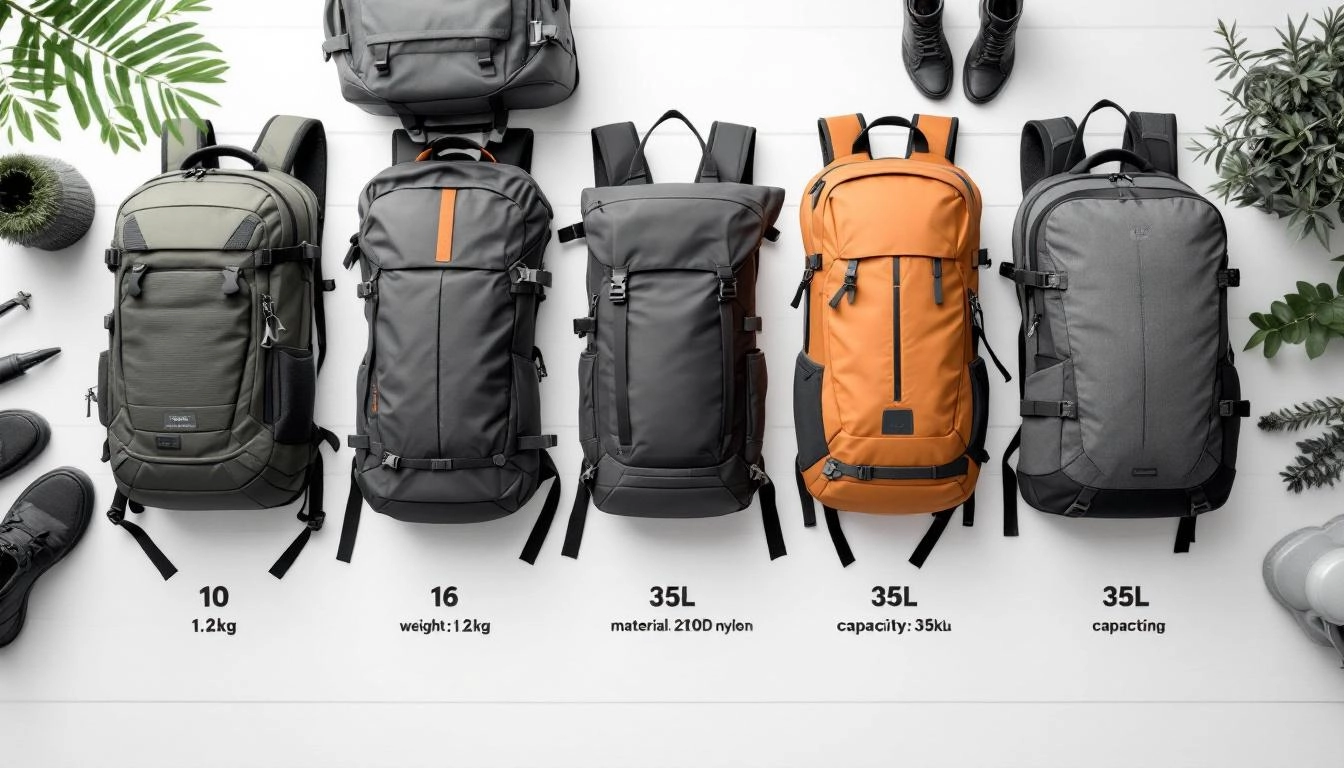
Capacity drives comfort just as much as fit. The best backpack capacity for hiking depends on trip length, gear bulk, and season.
Weekend vs Thru-Hike vs Winter Trips
Many hikers use:
- 40–50L for minimalist weekend trips
- 55–65L for multi-day or thru-hike setups
- Higher capacities for winter when insulation volumes increase
Always confirm manufacturer specs before buying. And remember: empty space invites overpacking. If you give yourself 70 liters, you’ll fill it.
Base Weight Reality Check
Before buying a pack, weigh your fully loaded kit (excluding food and water). If your base weight is higher than you expected, optimizing your multi-purpose backpacking items with smart gear swaps may reduce overall load before choosing a new pack.
Buy the pack that fits your current system—not the one you hope to own after a gear overhaul.
Minimalism vs Comfort Trade-Off
A 40L frameless pack might feel great at 18 pounds. Push it past its comfort rating with food and water, and you’ll feel every ounce by mile eight. Be honest about your fitness level and terrain. Steep, uneven trails demand better load control.
Understand Frame Types and Weight Trade-Offs
When comparing ultralight vs internal frame backpack designs, think about load control first, grams second.
Frameless Packs: Who They’re Actually For
Frameless packs shine for hikers with low base weights who pack carefully to create internal structure. Many achieve this by selecting space-saving multi-use backpacking gear that reduces bulk while maintaining function. If your total weight regularly exceeds a pack’s recommended capacity, shoulder strain will build quickly.
Internal Frame Packs: Balanced Option
Internal frame packs remain the most versatile option for beginners and intermediate hikers. They distribute weight well on uneven trails and handle heavier food carries more comfortably.
Ventilation vs Simplicity
Suspended mesh back panels increase airflow but add bulk and weight. Minimalist back sheets reduce complexity but sit closer to your back. In hot climates, ventilation can be worth the extra ounces. In cooler conditions, simplicity wins.
Check Load Transfer and Comfort Features
Small details make long days manageable.
Shoulder Straps, Load Lifters, and Sternum Strap
After tightening your hip belt, adjust shoulder straps so they contour without digging. Load lifters should angle slightly upward toward the pack frame—not run flat. The sternum strap stabilizes the load; don’t overtighten it.
Back Panel Structure and Padding
Dense foam supports heavier loads. Softer foam breathes better but may compress over time. Try bending slightly forward and side to side in-store. If you feel hard pressure along the spine, reconsider.
Pockets and Access Points
Stretch mesh pockets are useful but can snag on rock. Reinforced side pockets hold water bottles securely on off-camber terrain. If you prefer organized access, consider panel loaders. If you pack consistently and value simplicity, top loaders work well—especially when paired with multi-functional camping gear that reduces clutter inside your pack.
Evaluate Materials, Durability, and Weather Resistance
Ultralight materials reduce base weight but can wear faster in abrasive terrain.
Common Fabrics (Nylon, Ripstop, Dyneema, etc.)
Many manufacturers use high-denier nylon, ripstop weaves, or specialty composites. Verify exact fabric specs on official product pages before purchasing. Lower denier numbers usually mean lighter weight but potentially less abrasion resistance.
Rain Protection Strategy
“Water-resistant” is not waterproof. Plan redundancy. Use a pack liner or dry bags inside. In extended wet conditions, a separate rain cover can add protection.
For trip planning and weather awareness, review official backcountry planning guidance from the
National Park Service backcountry resources.
Stitching, Zippers, and Stress Points
Inspect bar tacks where straps connect. Tug lightly on load-bearing seams. Check reinforced fabric at the bottom of the pack. Quality construction matters far more than trendy marketing terms.
Match the Pack to Season and Terrain
Terrain and climate change everything.
Hot-Weather Hiking
Prioritize ventilation and easy hydration access. On exposed trails, stability is critical when carrying extra water. Review safety recommendations from the
U.S. Forest Service hiking safety page before long summer routes.
Cold or Shoulder Season Trips
Insulation layers are bulkier. Microspikes, extra gloves, and emergency gear require attachment points and usable compression straps. Planning lighter by focusing on smart multi-use backpacking equipment can help control volume in colder conditions. Plan conservatively and follow regional best practices outlined by
Parks Canada backcountry safety guidance.
Terrain Considerations
Scrambling routes demand stability. A slightly heavier internal frame may outperform an ultralight option when balance and load control are essential.
Test Before You Commit (How to Choose a Lightweight Backpack the Smart Way)
This is where most people rush—and regret it later.
Load It Properly In-Store
Add 20–30 pounds or a realistic equivalent of your intended load. Walk around. Climb stairs if possible. Shift side to side.
30-Minute Rule
Wear the pack for at least 20–30 minutes. Tingling in arms? Shoulder pressure increasing? Lower back hot spots? Those won’t improve on trail.
Return Policies and Field Testing
Review retailer and manufacturer return policies directly on their official sites before removing tags. Some stores allow limited outdoor testing; others do not. Confirm details before committing.
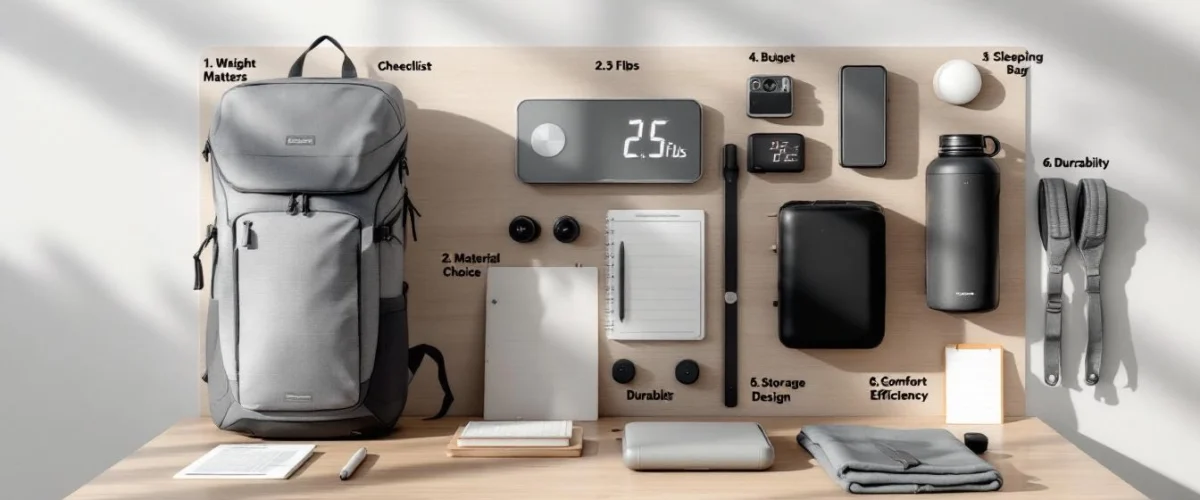
Checklist
- Measure torso length accurately
- Know your real base weight
- Choose capacity based on trip length and season
- Prioritize fit over absolute lowest weight
- Test with realistic load before buying
- Inspect stitching, zippers, and stress areas
- Plan rain protection system
- Confirm return policy
Common Mistakes
- Buying the lightest pack first and downsizing gear later
- Ignoring torso measurements
- Overlooking winter volume needs
- Choosing an oversized hip belt
- Trusting “ultralight” labels without checking load ratings
- Skipping in-store load testing
Frequently Asked Questions
How do I know what size pack to buy when learning how to choose a lightweight backpack?
Measure your torso, not just your height. Then try packs in your measured range and adjust the hip belt first. If the majority of weight doesn’t sit comfortably on your hips, the size or model isn’t right.
What is the ideal weight for a beginner following a Lightweight backpacking guide?
There’s no single ideal number. Focus on a manageable total load that allows stable movement and proper load transfer. Comfort and balance matter more than hitting an arbitrary weight target.
Is a frameless pack suitable for multi-day trips?
It can be, if your total load stays within the manufacturer’s recommended range and your packing style creates internal support. Heavier food or water carries often favor internal frames.
How many liters do I need for a 3-day backpacking trip?
Many hikers use 40–60 liters depending on gear bulk and season. Cold-weather trips require more volume due to insulation layers.
Does a lighter backpack always mean less durability?
Not always—but ultralight fabrics can sacrifice abrasion resistance. Check denier ratings and reinforced areas if you hike rough terrain.
How should I test a pack in-store before buying?
Load it with realistic weight, wear it for at least 20–30 minutes, and adjust all straps. Walk, pivot, and bend. Pay attention to pressure points.
Can one lightweight backpack work for both summer and shoulder-season hiking?
It can, if it has adequate compression and attachment points. However, ensure capacity supports bulkier insulation when temperatures drop.
Conclusion
The best pack isn’t the lightest one on the shelf—it’s the one that fits your body, supports your real load, and matches your terrain. If you remember three things: measure your torso, buy capacity based on actual gear, and test with realistic weight. That’s the foundation of learning how to choose a lightweight backpack wisely. Use this Lightweight backpacking guide as a checklist the next time you’re in-store. Take your time. Adjust carefully. Your shoulders will thank you at mile five.