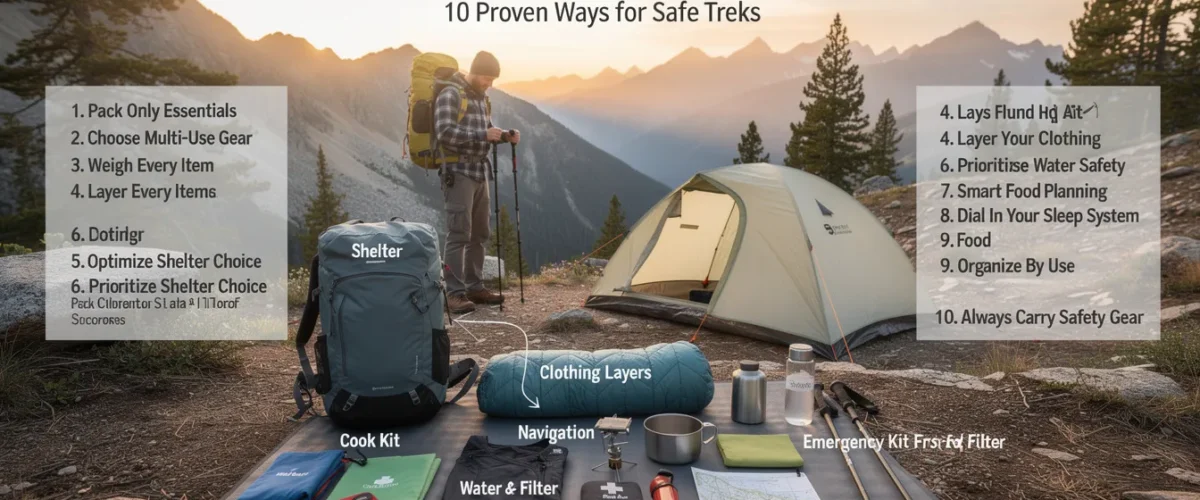
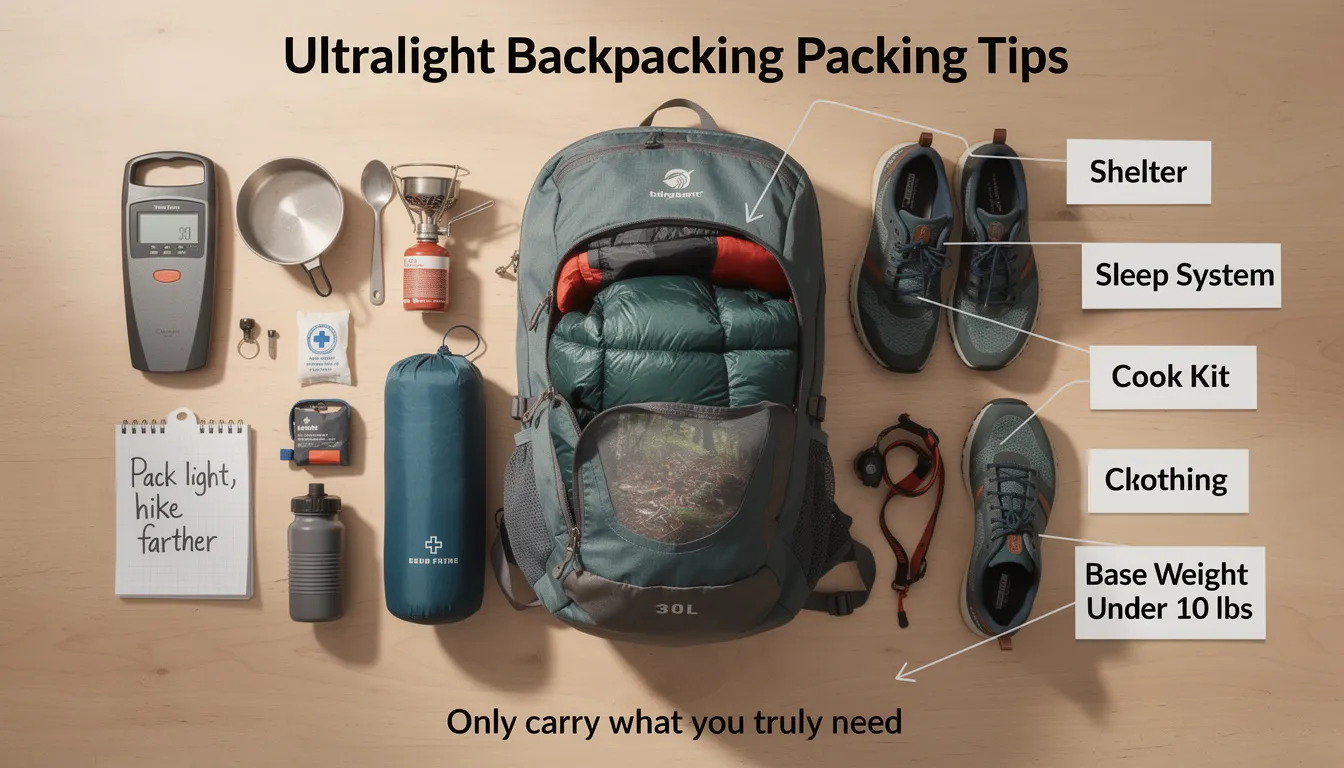
Ultralight backpacking packing tips can make the difference between a smooth, confident trek and a miserable bailout. Cutting weight feels liberating, but shaving ounces without a safety plan can lead to injuries, exposure, or bad decisions when conditions change. The goal isn’t to go as light as possible—it’s to go light enough while staying prepared. In this guide, you’ll learn 10 proven, field-tested approaches that balance weight savings with real-world safety. We’ll cover how to set sensible weight targets, choose shelter and sleep systems, plan food and water, manage navigation and emergency gear, and adapt to weather and terrain. Whether you’re new to ultralight backpacking or refining your setup for longer miles, these tips help you pack smarter, not riskier.
Table of Contents
- Pack Weight Targets & Safety Margins
- Shelter, Sleep, and Clothing Systems
- Food, Water, and Calorie Planning
- Navigation, Communication, and Emergency Gear
- Footwear, Load Carry, and Injury Prevention
- Weather, Terrain, and Seasonal Adjustments
Pack Weight Targets & Safety Margins (Ultralight backpacking packing tips)
Successful ultralight hikers aim for weight reduction without eliminating margins that keep them safe when plans change. Context matters: remoteness, weather volatility, and exit options all influence how light is appropriate.
Base weight ranges that still allow redundancy
Many hikers start by lowering base weight gradually rather than chasing an arbitrary number. Build redundancy through systems instead of duplicates—for example, clothing layers that double for sleep warmth, or a shelter that also blocks wind during breaks. These fundamentals are especially useful for those still learning beginner ultralight strategies.
What not to cut—critical safety items
Items tied directly to survival and decision-making should remain non-negotiable. Insulation for expected lows, reliable rain protection, navigation tools, lighting, and basic first aid keep small problems from escalating.
Experience check: deciding when to accept extra ounces for remote routes
On routes with limited bailouts or unreliable forecasts, accepting a few extra ounces can buy peace of mind. The lightest setup is rarely the smartest choice far from trailheads.
Shelter, Sleep, and Clothing Systems
Your protection from the elements is where smart choices matter more than raw weight savings. Think in terms of systems that work together.
Choosing a shelter for conditions vs. weight
Select a shelter that matches expected wind, bugs, and rainfall. Minimal tarps save weight but demand site selection skills; enclosed shelters add comfort in storms and reduce decision fatigue at the end of a long day.
Sleep system layering without cold spots
Combine a quilt or bag with an appropriate pad and clothing layers. Cold spots often come from poor pad insulation or drafts, not just inadequate loft.
Experience check: condensation, cold sleepers, and real-night pitfalls
Even well-rated gear can fail if humidity or user metabolism isn’t considered. Test your setup close to home before committing to long miles.
Food, Water, and Calorie Planning
Energy and hydration are often underestimated in ultralight setups. Planning prevents the dangerous spiral of fatigue and poor judgment.
Calorie density and packaging strategies
Choose foods that deliver sustained energy per ounce and repackage them to remove excess bulk. Balance quick snacks with meals that are easy to prepare when tired, especially if you’re still exploring introductory ultralight methods.
Water treatment options and carry capacity
Treatment methods vary in speed and reliability. Carry enough capacity to bridge unexpectedly dry stretches, even if that means extra weight for part of the day.
Experience check: misjudging water sources and fixing the plan mid-trek
Sources marked on maps can disappear seasonally. Flexibility—carrying collapsible containers or adjusting mileage—keeps a trip on track.
Navigation, Communication, and Emergency Gear
Ultralight does not mean unprepared. Redundancy here is about different methods, not duplicate gadgets.
Map/compass vs. GPS redundancy
A phone or GPS provides convenience, while a paper map and compass offer reliability when batteries die or electronics fail.
Minimal first-aid and repair kits that matter
Focus on items that address the most likely issues: blisters, minor cuts, pain management, and basic gear fixes.
Experience check: battery management failures and backups
Cold drains batteries quickly. Simple power management strategies can prevent losing navigation or communication mid-trip.
Footwear, Load Carry, and Injury Prevention
How weight is carried affects fatigue and injury risk just as much as how much you carry.
Trail runners vs. boots with ultralight loads
Lighter footwear reduces energy expenditure, but adequate support and traction remain essential for uneven terrain.
Pack fit, weight distribution, and hotspots
Dial in torso length, hip belt tension, and shoulder strap adjustment. Early hotspot detection prevents long-term injury.
Experience check: preventing overuse injuries on long days
Gradual mileage increases and rest breaks protect joints and tendons over consecutive days.
Weather, Terrain, and Seasonal Adjustments
No packing list is static. Conditions dictate smart modifications.
Rain, wind, heat, and cold adaptations
Ventilation in heat, wind protection on ridges, and reliable insulation in shoulder seasons keep risk manageable.
Terrain-driven packing changes
Rocky routes, dense brush, or snow require tailored gear choices, even for dedicated ultralight hikers.
Experience check: when forecasts fail and contingencies save the trip
Carrying adaptable layers and conservative margins helps absorb surprises without panic.
Checklist
- Verify insulation and rain protection match forecast lows
- Confirm water capacity for longest dry stretch
- Pack dual-use items where possible
- Do a full pack weigh-in and shakedown walk
- Ensure quick access to navigation and first aid
Common Mistakes
- Cutting insulation or rain gear too far
- Underestimating water needs
- Relying on a single navigation or power source
- Ignoring seasonality and microclimates
Frequently Asked Questions
What are the safest ultralight backpacking packing tips for beginners?
Start by reducing weight gradually, keeping all safety-critical gear, and testing changes on short trips before committing to remote routes. New hikers often benefit from fundamentals outlined in beginner-friendly ultralight guides.
How light is too light for multi-day treks?
If your setup no longer covers expected weather, navigation, and emergency needs, it’s too light regardless of the scale number.
Which Ultralight backpacking tips matter most in bad weather?
Prioritize shelter integrity, reliable insulation, and waterproof layers over aggressive weight savings.
Do ultralight packs increase injury risk?
Not inherently. Proper fit and gradual conditioning matter more than pack weight alone.
How do I plan food and water without carrying too much?
Use calorie-dense foods and research water sources carefully, adding flexible capacity for uncertainty.
What emergency gear should never be skipped?
Navigation tools, insulation, weather protection, basic first aid, and a light source are essential regardless of pack weight goals.
Conclusion
Ultralight backpacking packing tips work best when they support sound judgment, not replace it. Cutting weight should reduce fatigue and increase enjoyment while preserving the ability to respond when conditions change. Treat every trip as an opportunity to refine systems, not just shave ounces. Before your next trek, do a personal shakedown hike and review your list against route-specific risks. Thoughtful preparation turns lighter packs into safer, more confident miles.