Table of Contents
- Define Ultralight Backpacking (for Beginners)
- Dial In Your Base Weight—Safely
- Smart Gear Choices That Actually Matter
- Food, Water, and Fuel: Lightweight but Adequate
- Clothing & Sleep Systems for Variable Conditions
- Route Planning, Skills, and Safety Essentials
- Test, Iterate, and Upgrade Over Time
Define Ultralight Backpacking (for Beginners)
Ultralight backpacking is often confused with extreme minimalism. For beginners, the goal is different: carry less while staying prepared. Traditionally, “ultralight” refers to a base weight (everything in your pack except food, water, and fuel) under ~10 pounds. That number is a guideline—not a rule—especially when you’re learning. Many hikers use an ultralight camping checklist to understand what matters most early on.
Ultralight basics vs. minimalism
Minimalism can cut essential redundancy too far. Ultralight thinking asks smarter questions: Do you need two heavy items that do the same job? Can one lighter piece replace several bulky ones? You still bring insulation, rain protection, navigation, and first aid—just with a weight-aware mindset.
Base weight explained
Base weight matters more than total pack weight because food and water fluctuate. Lowering base weight makes every mile easier and reduces joint fatigue. For most beginners, a realistic target is steady improvement, not a magic number.
Experience prompt
List your personal comfort thresholds for sleep quality, warmth, and calories. These three drive smart decisions more than any gram-count contest.
Dial In Your Base Weight—Safely
The fastest gains come from understanding what you already carry. Before buying anything, inventory and weigh your gear.
Create a gear inventory
Weigh everything—including stuff sacks and “just in case” items. Patterns will pop out: duplicate tools, heavy containers, oversized clothing. These are your low-hanging fruit and can be clarified by reviewing a detailed minimalist essentials list.
Cut weight, not safety
Never skimp on safe shelter for the conditions, adequate insulation, rain protection, navigation, or calories. Parks and land managers consistently emphasize preparedness and weather awareness—especially in variable terrain managed by agencies like the National Park Service and U.S. Forest Service.
Experience prompt
Pack for one overnight at home, then for a three-day trip. Note what changes—and why.
Smart Gear Choices That Actually Matter
If you do choose to upgrade, prioritize items with the biggest impact. These Ultralight backpacking tips help beginners spend wisely and align well with a structured ultralight essentials guide.
Pack, shelter, sleep system
These “big three” dominate base weight. A well-fitting pack sized to your lighter load can save pounds alone. For shelter, many beginners choose lightweight tents or trekking-pole shelters that balance weather protection and ease of setup. For sleep, aim for the lightest system that reliably keeps you warm for expected lows.
Budget paths vs. premium
You can save by choosing last season’s models, lighter versions of familiar gear, or simple materials. Invest where failure is costly—sleep warmth and rain protection—then economize elsewhere.
Experience prompt
Pitch your shelter and sleep in it at home or on a local hike to confirm comfort before committing.
Food, Water, and Fuel: Lightweight but Adequate
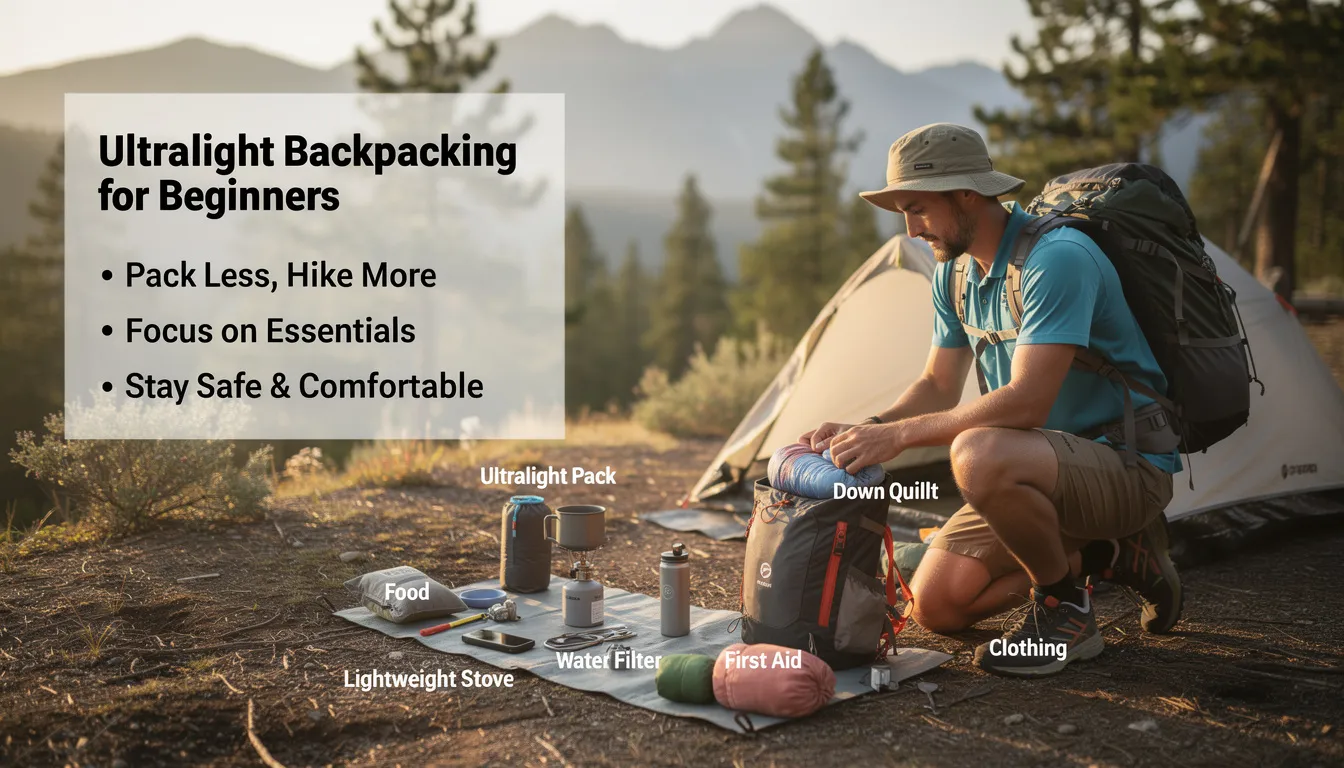
Food and water are variable weight, but smart planning keeps them efficient without risking energy or hydration.
Calorie density planning
Aim for foods with higher calories per ounce—nuts, nut butters, tortillas, dehydrated meals—and enough carbs for uphill days. Underfueling is one of the most common beginner mistakes.
Water strategies
Carry capacity matched to sources and conditions, not fear. Treatment methods vary by region; always verify current conditions with land managers and follow guidance promoted by organizations like American Hiking Society.
Experience prompt
Log how hunger and hydration change with mileage, elevation gain, and heat to refine your plan.
Clothing & Sleep Systems for Variable Conditions
Lightweight comfort comes from adaptable layers, not piling on spares.
Layering strategy
Build around a base layer, an insulating mid-layer, and a weather shell. Choose pieces that earn their weight by covering a wide temperature range.
Rain and wind management
Staying dry prevents heat loss. A reliable rain layer and wind protection often matter more than extra insulation.
Experience prompt
Decide insulation based on forecast variability, not just average lows—especially in shoulder seasons.
Route Planning, Skills, and Safety Essentials
Lighter packs amplify skills. Strong planning reduces the need for excess gear.
Navigation basics
Carry maps and know how to use them, with a backup plan if devices fail. Many agencies, including Parks Canada, stress route awareness as a cornerstone of backcountry safety.
Risk management
Set weather windows, conservative turn-around times, and communicate your itinerary. Leave No Trace principles—supported by Leave No Trace Center for Outdoor Ethics—help you travel lighter while minimizing impact.
Experience prompt
Start with beginner-appropriate terrain and modest mileage; add complexity as skills grow.
Test, Iterate, and Upgrade Over Time
Ultralight success is iterative. Each trip teaches you what to keep, replace, or remove.
Shakedown hikes
Short trips close to home reveal problems early—before they’re consequential.
Track what works
Write quick notes on comfort, failures, and fixes. Patterns inform smarter upgrades later.
Experience prompt
Evolve your kit gradually as your decision-making improves.
Checklist
- Define a realistic target base weight for your experience.
- Inventory and weigh all gear.
- Validate insulation and rain protection for expected conditions.
- Plan calories and water per day; confirm treatment method.
- Print/download maps and share your itinerary.
- Complete a local shakedown hike.
Common Mistakes
- Going “too light” too fast and compromising safety.
- Ignoring fit and comfort for grams saved.
- Underestimating food, water, or weather variability.
- Skipping practice hikes.
Frequently Asked Questions
What is ultralight backpacking for beginners and how light is “light enough”?
It’s a safety-first approach to reducing base weight through smarter choices. “Light enough” is when your pack supports your goals without sacrificing warmth, hydration, navigation, or rest—often above strict ultralight thresholds at first.
Which Ultralight backpacking tips matter most when starting out?
Weigh your gear, focus on the big three, avoid duplicates, and test locally. Skill building often saves more weight than shopping.
Is ultralight backpacking safe for first-time backpackers?
Yes—when treated as a progression. Keep essential safety items, plan conservatively, and follow land-manager guidance.
How much should a beginner’s base weight be?
There’s no single number. Many beginners aim to steadily reduce weight over several trips while maintaining comfort and preparedness.
What gear should beginners upgrade first to save weight?
Start with the pack (right-sized), then shelter and sleep system—after confirming they meet your weather needs.
Can ultralight backpacking work on a budget?
Absolutely. Inventory first, replace only what earns its keep, and upgrade gradually based on experience.
Conclusion
Ultralight success comes from restraint, not extremes. Take a safety-first, skills-forward path: make one or two changes, test them locally, and refine over time. With steady practice, ultralight backpacking for beginners becomes less about counting grams and more about moving confidently through wild places. Build a simple gear list today, schedule a shakedown hike this week, and let experience guide your next upgrade.