Table of Contents
- Why Minimalist Camping Matters
- The 10 Stunning Minimalist Camping Essentials
- How to Build Your Minimalist Camping Packing List
- Ultralight Food, Water, and Cooking Strategy
- Shelter, Sleep, and Weather Readiness
- Navigation, Safety, and Leave-No-Trace
- Budget Tips for Minimalist Camping Gear
- Checklist
- Common Mistakes
- FAQs
- Conclusion + CTA
Why Minimalist Camping Matters
Minimalist camping is about carrying only what you need—nothing more. This mindset leads to smoother trips, safer movement, and more mental clarity on the trail.
Benefits of packing less for mobility and comfort
Lightening your load reduces muscle fatigue, improves balance on uneven terrain, and lets you hike farther with less strain. A streamlined pack also makes setting up and breaking down camp noticeably faster.
How Minimalist camping essentials reduce decision fatigue
Fewer items mean fewer choices. With a simple curated kit, every tool has a purpose and a predictable place, making camp tasks easier and reducing mental clutter.
When minimalist camping is the best option (season, terrain)
Minimalist camping shines on summer and shoulder-season trips, low-altitude routes, and areas with reliable water sources. It’s ideal for hikers who value movement over comfort-heavy luxuries. For more detailed guidance, see [Lightweight backpacking guide].
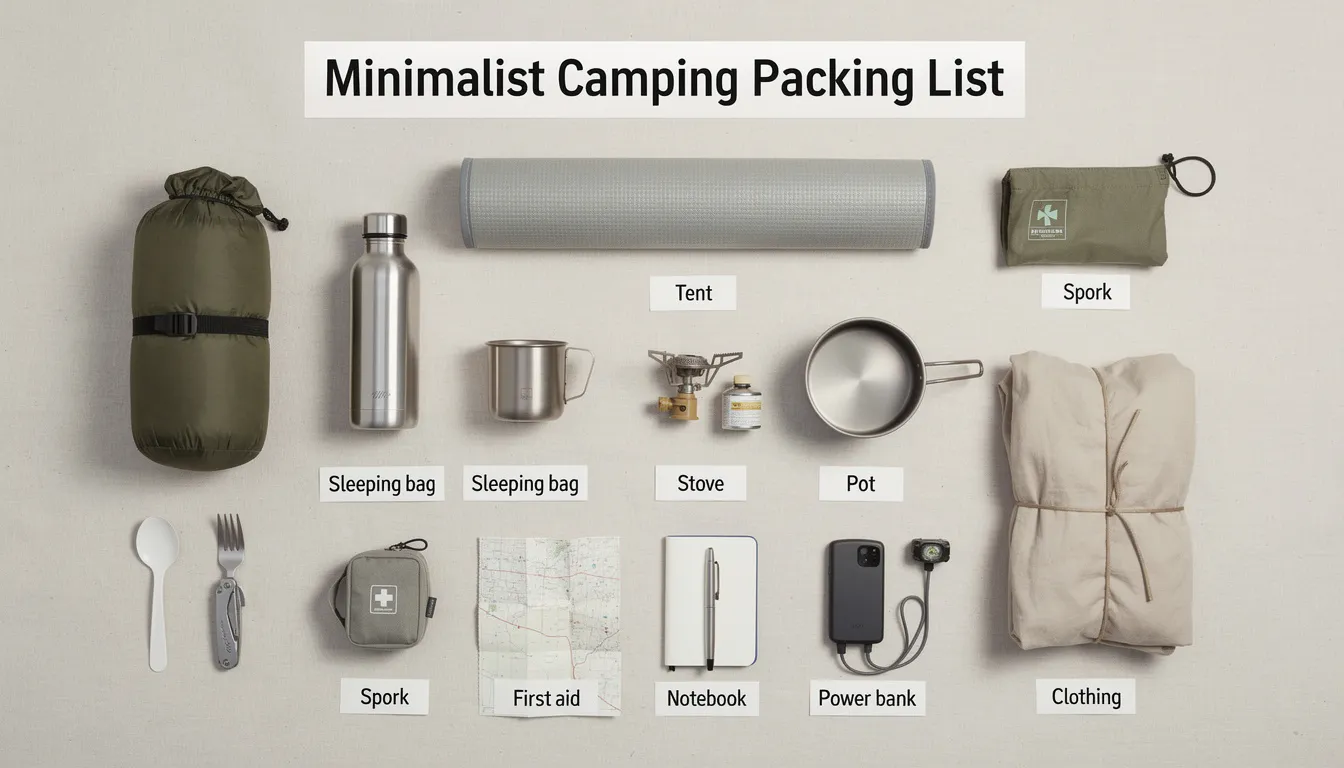
The 10 Stunning Minimalist Camping Essentials
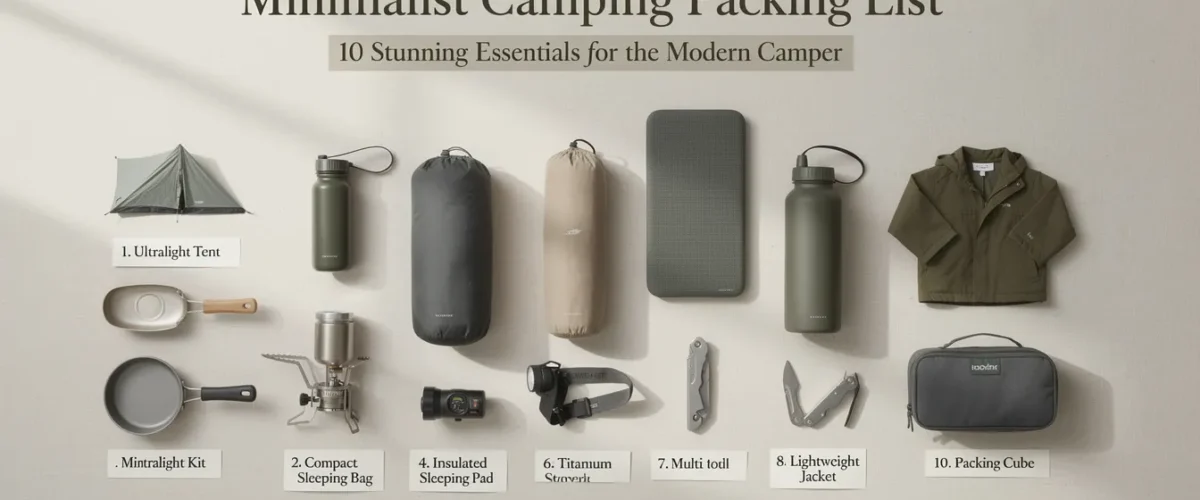
This section breaks down the 10 core items that form the foundation of any lean outdoor kit. These are the true Minimalist camping essentials that keep you safe while cutting weight.
Lightweight shelter options (tarp, bivy, UL tent)
Choose between a simple tarp setup, a bivy sack, or a one-pole ultralight tent. Each is compact and weather-ready. For examples and comparisons, visit the shelter guides at REI’s expert advice section.
Compact sleep system (quilt, inflatable pad)
Camping quilts pack down smaller than sleeping bags and often weigh less. Pair one with a thin insulated pad to add warmth without bulk.
Minimal cookware + micro-stove considerations
One small titanium pot and a micro-canister stove are enough for boiling water and preparing simple meals. If fire restrictions apply, always follow local rules.
Water filtration essentials
Ultralight squeeze filters or chemical purification tablets keep you hydrated without heavy bottles. Plan your route around dependable water sources.
Minimalist clothing layers
Pack one warm layer, one base layer, and a wind/rain shell. Focus on moisture-wicking fabrics that dry quickly and layer well.
Micro first-aid kit essentials
Carry only the basics: blister care, bandages, tape, ibuprofen, and antiseptic wipes. Tailor it to your personal needs.
Ultralight navigation tools (offline apps + compass)
Download offline maps on your smartphone and bring a backup compass. Keep your phone in airplane mode to preserve battery.
Multi-tool or micro-knife selection
A tiny folding knife or single-blade multi-tool handles camp chores without weighing down your pack.
Small lighting system (headlamp)
A rechargeable micro-headlamp offers essential nighttime visibility. Always check the battery before leaving home.
Food storage + wildlife safety basics
Use odor-resistant bags or a lightweight bear bag system when appropriate. Follow local wildlife regulations from agencies like U.S. National Parks.
How to Build Your Minimalist Camping Packing List
A minimalist kit isn’t one-size-fits-all. Use these steps to customize yours.
Decide on weather, terrain, and distance
Your environment dictates your gear. Cold nights require a warmer quilt; desert trips demand extra water capacity.
Choose only cross-functional gear
A pot can serve as a bowl; trekking poles can pitch your tarp. Prioritize gear with multiple uses.
Pack weight distribution strategy
Place heavy items close to your spine and mid-pack to maintain balance. For more detail, see [Backpack fitting guide].
Ultralight Food, Water, and Cooking Strategy
Efficient food and water planning reduces pack weight dramatically.
Calorie-dense but compact food options
Choose items like nut butters, tortillas, dehydrated meals, and trail mix. They deliver high calories per ounce.
Water sourcing and filtration planning
Use maps or ranger updates to confirm reliable water sources. A small filter protects you from unsafe water without needing to carry liters at once.
Minimal-cook vs no-cook meal strategy
No-cook approaches (cold soak meals, ready-to-eat snacks) eliminate the need for a stove entirely. Great for warm-weather trips.
Shelter, Sleep, and Weather Readiness
Your shelter and sleep system determine comfort and safety more than any other gear category.
Choosing the right ultralight shelter
Bivy sacks excel in mild weather. Tarps offer flexibility but require skill. Ultralight tents give the most protection with minimal setup time.
Sleep system based on season
Match your quilt temperature rating to the coldest expected nighttime low. A higher R-value sleeping pad adds insulation for shoulder seasons.
Rain, wind, and cold backup strategies
A compact emergency blanket and a wind-resistant outer layer make a huge difference when weather shifts unexpectedly.
Navigation, Safety, and Leave-No-Trace
Minimalist gear still demands responsible planning and environmental care.
Simple navigation system
Your phone plus a small compass is usually enough for marked trails. Keep digital maps downloaded offline.
Micro first-aid approach
Focus on items that address the most common field injuries: blisters, small wounds, and strains.
Leave-No-Trace for minimalist campers
Follow the seven LNT principles. For a deeper dive, explore the guidance from the Leave No Trace Center for Outdoor Ethics.
Budget Tips for Minimalist Camping Gear
What you can DIY cheaply
Make your own alcohol stove, stuff sacks, or groundsheet. These save money and reduce pack weight.
When second-hand gear works
Backpacks, tents, and clothing often perform like new when purchased used—great for beginners.
When to invest in ultralight gear
Upgrade items that give the biggest weight savings per dollar: shelter, quilt, and pack.
Checklist
- Shelter + sleep system (UL tent or tarp, quilt, pad)
- Minimalist cooking kit (micro-stove, mini pot, fuel)
- Water filtration system
- Base clothing layers + weather shell
- Safety + navigation kit
- Food planning items
- Waste + Leave-No-Trace supplies
Common Mistakes
- Overpacking “just in case” items
- Ignoring weather-specific needs
- Choosing ultralight gear that’s too fragile for terrain
- Poor water planning
- Underestimating nighttime temperatures
Frequently Asked Questions
What should be in a minimalist camping packing list for beginners?
Stick to shelter, sleep gear, a small cook kit, water filtration, basic clothing layers, a light, a micro first-aid kit, and simple navigation tools. This keeps things safe and easy to manage.
What are the most important Minimalist camping essentials?
Your shelter, quilt, sleeping pad, water system, and clothing layers form the foundation of any minimalist setup. Everything else builds around these items.
How do I keep pack weight low without sacrificing safety?
Choose multi-use gear, check weather reports, and use reliable shelter and insulation. Safety always comes first.
Can I camp with only these 10 essential items?
Yes, as long as conditions are mild and you have experience using minimalist setups. Always adjust for weather and local regulations.
How do minimalist campers handle food and water?
By carrying compact calorie-dense foods and filtering water along the route instead of hauling large volumes.
Is minimalist camping suitable for first-time campers?
It can be, but beginners should start in fair weather and on familiar trails. Practice at home first.
How do I adjust my minimalist packing list for cold weather?
Choose a warmer quilt, a higher R-value sleeping pad, and an extra insulating layer. Cold trips require more preparation.
Conclusion
Minimalist camping gives you the freedom to move lightly, stay organized, and enjoy the outdoors without unnecessary bulk. With the 10 essential items outlined above, you have everything needed to build a reliable and efficient minimalist camping packing list for any lightweight adventure. Grab your gear, plan your next trip, and explore more guides on ultralight travel and smart packing strategies so every campout feels simple and stress-free.