Table of Contents
- Why Minimalist Camping Works
- The Core Minimalist Camping Essentials for 2026
- How to Choose Gear That Replaces Multiple Items
- Packing Strategy for a True Minimalist Camping Gear List
- Seasonal & Location Adjustments
- Budget vs Premium Options
- Safety & Regulations
- Checklist
- Common Mistakes
- Frequently Asked Questions
- Conclusion
minimalist camping gear list 10 smart minimalist camping essentials 2026
Why Minimalist Camping Works
Minimalism outdoors isn’t about going without. It’s about choosing smarter gear that performs multiple tasks while keeping pack weight low. This approach works for beginners, backpackers, and even car campers who prefer clean, simple setups.
Benefits for backpackers and car campers
A lighter pack improves mobility, reduces joint strain, and helps you set up camp faster. Minimalist systems also keep your campsite tidy, with fewer loose items to misplace or forget.
How Minimalist camping essentials reduce decision fatigue
When you bring less, you make fewer choices—what to wear, what to cook with, where to store things. That mental clarity makes outdoor travel calmer and more enjoyable.
When minimalist setups are not ideal + quick fixes
Minimalist kits are not always suitable for extreme cold, technical alpine routes, or long unsupported treks. In those cases, upgrade insulation, bring redundant navigation, and carry a slightly larger first aid kit.
The Core Minimalist Camping Essentials for 2026
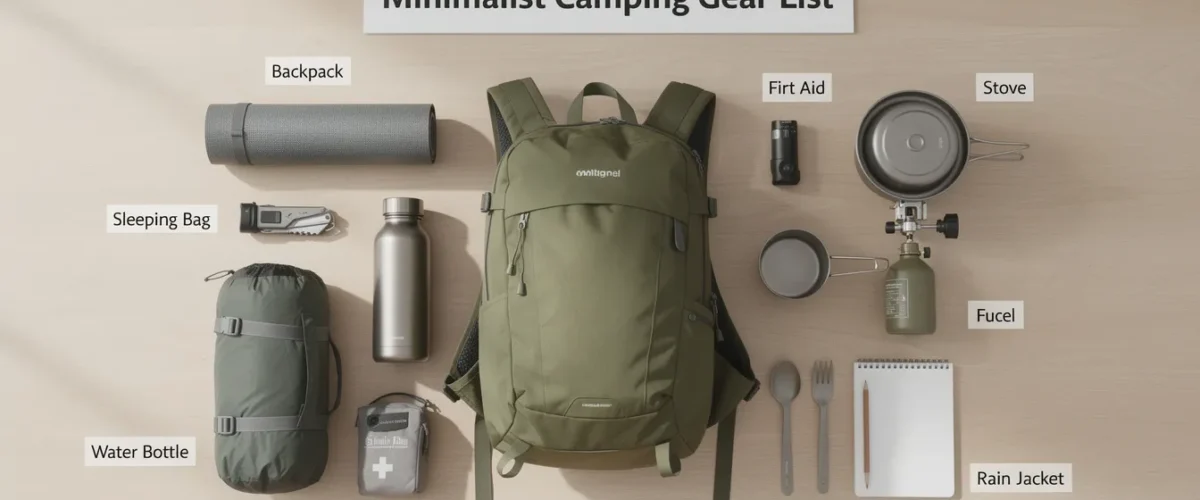
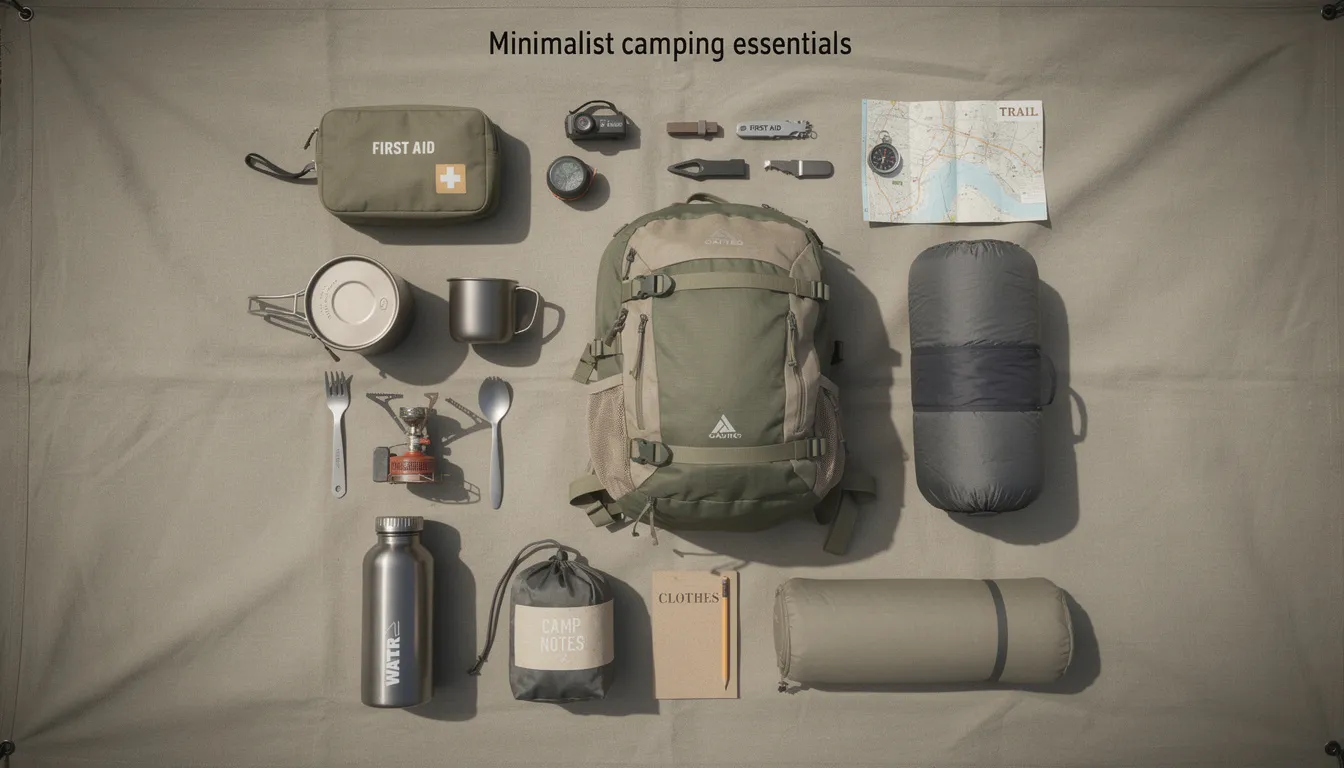
Here’s where we focus directly on the Primary Keyword: Minimalist camping essentials. The list below represents a lean but functional 10‑item system designed for modern lightweight camping.
The updated 2026 minimalist camping gear list (10 items)
- Shelter: Ultralight tent or tarp setup
- Sleep system: 30–40°F quilt + inflatable pad
- Cook kit: Stove + small pot combo
- Water system: Filter + 1L–2L soft bottle
- Clothing core: Base layer + midlayer + shell
- Footwear: Lightweight hikers or trail runners
- Light source: Rechargeable headlamp
- Fire: Bic lighter + backup firestarter
- Tools: Mini knife or micro‑multi‑tool
- Safety/first aid: Minimal kit + whistle
Multipurpose gear recommendations
Choose items that do double duty. A trekking pole can support a tarp shelter. A buff can be used as a neck gaiter, sleep mask, or pot grabber. For shelter comparisons, see [ultralight tent vs tarp].
Weight, durability, and cost considerations
Modern cottage‑industry brands offer high-strength fabrics with excellent longevity. Independent field testing from sites like Outdoor Gear Lab can help you evaluate long-term durability.
How to Choose Gear That Replaces Multiple Items
Every item should perform at least two jobs, reducing your overall load.
Multipurpose shelter setups
A tarp pitched with trekking poles cuts weight significantly and adds ventilation. Just ensure you’re comfortable with different pitch styles before relying on it in the field.
Cook kits that combine stove + pot systems
Integrated units boil water faster and nest all components inside the pot. This saves space and keeps your pack organized.
Clothing layers that double as sleep insulation
A warm midlayer can boost your quilt rating at night, letting you choose a lighter sleep system overall.
Packing Strategy for a True Minimalist Camping Gear List
Good packing is about weight balance, accessibility, and safety.
Step-by-step packing order
- Bottom of pack: quilt, clothing you won’t need until camp
- Middle: cook kit, food, water filter
- Top: shell jacket, snacks, headlamp
- Exterior: poles, wet gear, small trash bag
What to skip without compromising safety
Extra clothing duplicates, heavy footwear, large knives, bulky hygiene kits, and “just in case” gadgets usually stay unused.
Weight distribution for comfort
Keep heavy items close to your back panel. If you need help adjusting your pack, see [backpack fitting guide].
Seasonal & Location Adjustments
Adjusting for hot vs cold climates
For heat, bring breathable layers and a lighter quilt. For cold, add a fleece beanie and thicker sleep pad. Never skip insulation in shoulder seasons.
Rain and wind considerations
Windbreaks, guyline tensioners, and a reliable rain shell are critical for exposed campsites. Rehearse pitching your shelter in poor conditions.
Local regulations and fire restrictions
Many regions limit campfire use. Always verify updated rules through agencies like Parks Canada’s official campground guidelines.
Budget vs Premium Options
Where budget gear performs well
Backups, basic clothing layers, and small tools often work fine at budget tiers.
When premium gear is worth it
Shelters, sleep systems, and backpacks benefit greatly from top-tier materials, especially if you camp frequently.
Used gear: what’s safe vs risky
Used sleeping bags, hiking poles, and cook kits are generally safe. Avoid used filters, helmets, or compromised down gear.
Safety & Regulations
Fire safety, wildlife safety, trail rules
Store food properly, follow posted fire restrictions, and stay on designated trails. If you’re unsure, check guidance from National Park Service resources.
First aid basics for minimalist setups
Carry bandages, blister care, tweezers, antiseptic wipes, and any personal medications.
Environmental impact and Leave No Trace
Follow established principles from the Leave No Trace Center for Outdoor Ethics to minimize your footprint.
Checklist
- 10 core gear items packed
- Weather‑ready clothing layers
- Food + water plan
- First aid and fire tools
- Local regulations checked
- Gear audit completed before departure
Common Mistakes
- Overpacking “just in case” items
- Ignoring multipurpose gear opportunities
- Skipping proper weatherproofing
- Poor pack organization
- Using outdated packing lists
Frequently Asked Questions
What should a minimalist camping gear list include in 2026?
It should include the 10 core categories: shelter, sleep system, cook kit, water filter, core clothing, footwear, headlamp, fire tools, a compact knife, and first aid.
Are Minimalist camping essentials enough for overnight trips?
Yes, as long as you adjust insulation and weatherproofing for conditions.
How do I keep my pack ultralight without sacrificing safety?
Use multipurpose items, avoid duplicates, and always maintain a minimal first aid and fire kit.
What gear can replace multiple items to reduce weight?
Trekking poles that support a tarp, a buff that replaces several clothing accessories, and integrated stove systems.
Is minimalist camping suitable for beginners?
Absolutely—minimalism reduces complexity and helps beginners stay organized.
How do I choose the best shelter for a minimalist setup?
Balance weight, weather exposure, and your comfort with pitching tarps versus using an ultralight tent.
Can I build a minimalist kit on a tight budget?
Yes—prioritize shelter and sleep quality first, then add affordable accessories as needed.
Conclusion
A strong minimalist camping gear list gives you everything you need and nothing you don’t—lighter loads, faster setups, and more enjoyable time on the trail. Start with the 10 essentials in this guide, test your kit on short trips, and fine‑tune it as you gain experience. With practice, you’ll discover how Minimalist camping essentials create a dependable, streamlined outdoor system. Before your next adventure, review your list, adjust for weather, and pack confidently knowing your minimalist camping gear list is dialed in for 2026 and beyond.