Table of Contents
- Why Minimalist Camping Matters
- How to Build a Minimalist Gear Mindset
- 7 Stunning Essentials You Truly Need
- How to Pack for Maximum Efficiency
- Seasonal + Location Adjustments
- Safety Essentials That Still Stay Minimal
- Checklist
- Common Mistakes
- Frequently Asked Questions
- Conclusion
Why Minimalist Camping Matters
Minimalist camping strips your pack down to the true necessities so you can move farther with less fatigue and make clearer decisions in the backcountry. Carrying less improves mobility, sharpens situational awareness, and reduces energy expenditure—critical benefits during long mileage days or unexpected weather.
Benefits: mobility, lower fatigue, safer decision-making
A lighter pack reduces joint strain and lets you respond faster to trail changes. When you’re less tired, you hydrate better, navigate more accurately, and make better choices—major safety wins.
How Minimalist camping essentials differ from standard camping gear
Standard camping gear emphasizes comfort. Minimalist setups emphasize versatility and weight savings. For example, a quilt replaces a bulky sleeping bag, or a trekking pole-supported shelter replaces tent poles.
When minimalist packing is ideal vs. when it’s not
Minimalist packing is ideal for fair-weather backpacking, lightweight overnights, and mileage-focused trips. It is not ideal during deep winter storms, technical mountaineering, or when traveling with groups that require extra shared gear.
Learn the fundamentals with [Lightweight backpacking basics] and practice Leave No Trace through the guidance at Leave No Trace principles.
How to Build a Minimalist Gear Mindset
A minimalist kit starts with decision-making, not gear purchases. Instead of grabbing every “just in case” item, you evaluate purpose, durability, and risk level.
The “must-have vs. nice-to-have” framework
Ask: Does this item directly support shelter, sleep, water, food, safety, or navigation? If not, it’s optional.
Weight vs. versatility vs. durability trade-offs
Ultralight pieces save weight but may wear out faster. Durable pieces last longer but weigh more. Choose based on trip length and expected conditions.
Safety-first lens even in minimalist kits
Never trim essential safety items. Instead, choose lighter versions of them. A 3-ounce headlamp beats leaving one behind entirely.
For deeper gear selection guidance, explore REI’s Gear Advice.
7 Stunning Essentials You Truly Need
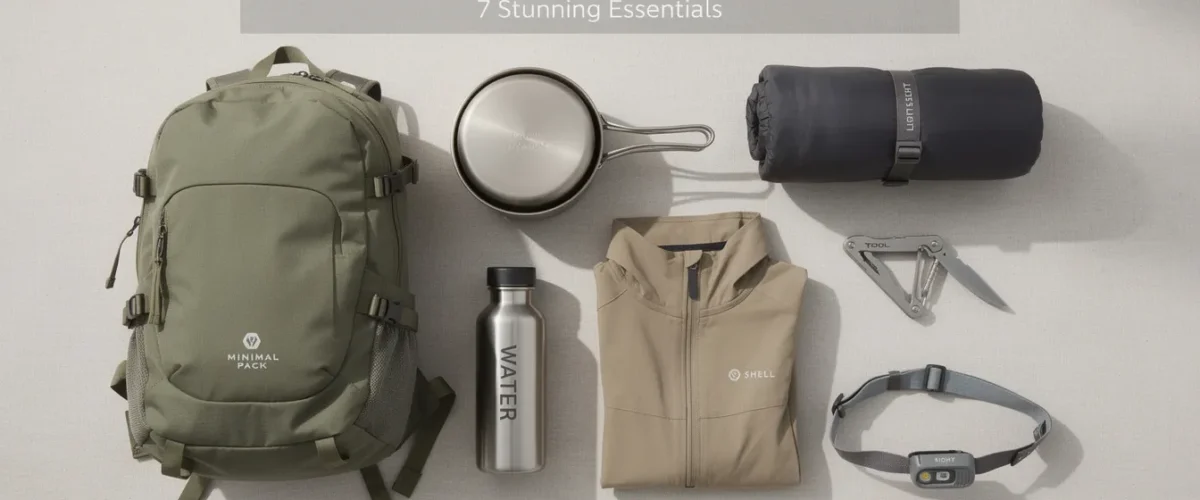
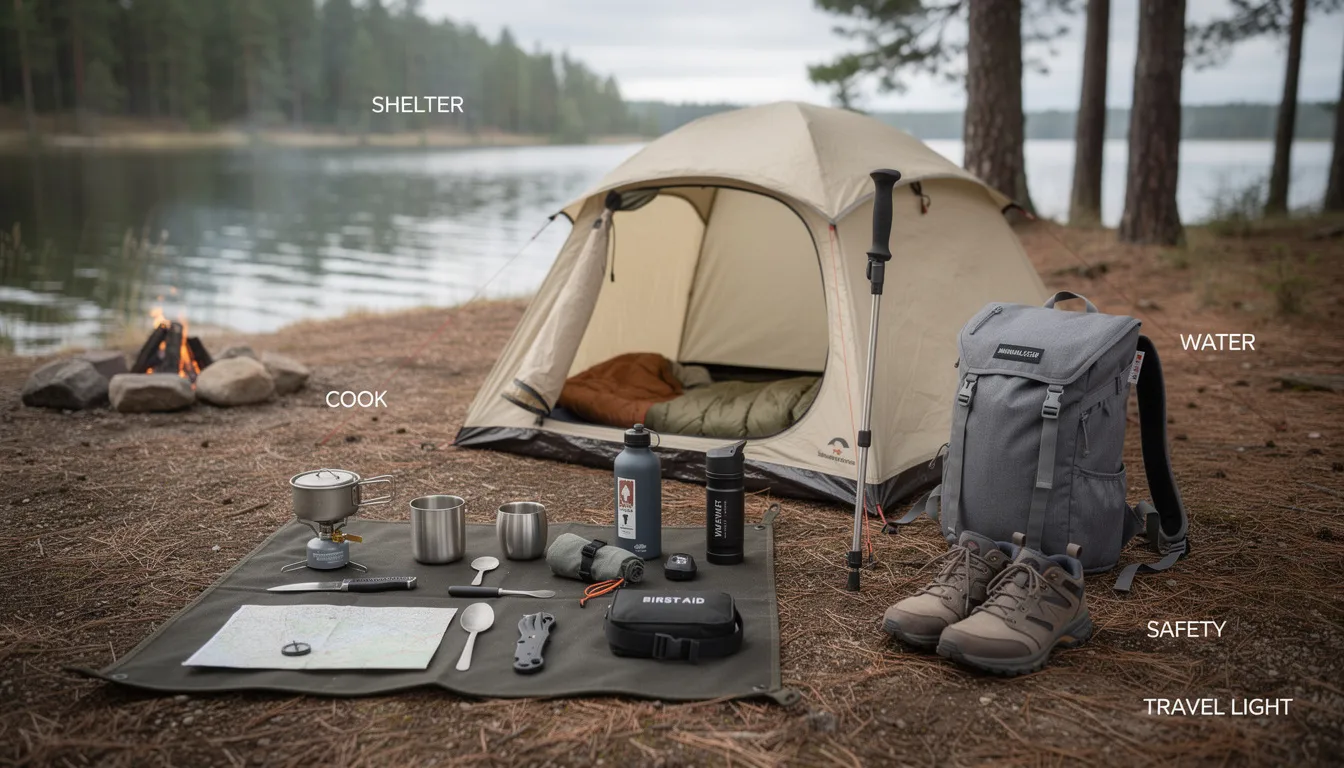
This section highlights the essential gear for minimalist camping and how to choose each item confidently. These seven pieces form the backbone of any lightweight, safe, and adaptable setup.
Ultralight shelter system
Look for shelters under 1.5–2.5 lbs. Trekking‑pole shelters save the most weight. Prioritize weatherproof materials like silnylon or Dyneema and ensure reliable stake-out points.
Minimalist sleep setup (pad + quilt)
A high-R-value inflatable pad paired with a down quilt creates a warm, compressible system. Aim for 16–24 oz combined. Quilts allow venting in warm weather and reduce bulk dramatically.
Compact cook kit
Most minimalist kits include a tiny stove, small titanium pot, and a fuel canister. Combined weight can be as low as 8–12 oz. Ensure the pot fits your meals and burns fuel efficiently.
Water purification method
Filters (1–3 oz) remove sediment and improve taste. Tablets weigh almost nothing but take 30 minutes to treat water. Many hikers carry both for redundancy.
Minimal clothing layers
Pack only layers that regulate temperature and protect from weather: a base layer, mid-layer fleece, rain shell, and one spare pair of socks. Adjust layers by season and region.
Multi-use tools
A small blade, mini repair kit, and patch tape handle 90% of backcountry fixes. Prioritize stainless or carbon steel and carry only what you truly use.
Navigation + light
A 2–3 oz headlamp plus a waterproof map or GPX track is essential. Electronics fail; always carry at least one analog backup.
Compare shelter options with [Best lightweight tents].
How to Pack for Maximum Efficiency
Packing smart keeps your load steady and accessible throughout the day.
Weight distribution strategy
Heavy items go mid-pack near your spine. Light, compressible items fill gaps.
Compression + storage systems
Use stuff sacks sparingly. Over-compressing increases pack stiffness, reducing comfort. Dry bags protect critical items like quilts.
Reducing duplicates and single-use items
Choose gear with multiple functions—like using your cook pot as a bowl—to shave real weight.
5-step packing workflow
- Lay out all gear.
- Remove duplicates.
- Pack shelter + sleep items first.
- Add food + water components.
- Finish with clothing and quick-access items.
Seasonal + Location Adjustments
Minimalist gear adapts to conditions, but only when you tailor your pack to the environment.
Cold-weather minimalist adaptations
Increase insulation, bring a warmer pad, and choose wind-resistant shelters. Safety outweighs weight savings.
Hot/dry climate essentials
Carry extra water capacity, sunscreen, and breathable clothing. Shade and hydration matter more than cutting ounces.
Choosing gear for terrain-specific conditions
Rocky terrain demands tougher footwear; dense forest requires durable fabric to resist abrasion.
For safety guidance in various climates, see Parks Canada backcountry resources.
Safety Essentials That Still Stay Minimal
You can remain lightweight without compromising health or navigation security.
First aid basics that scale down well
Pack only the essentials: blister care, small bandages, antiseptic wipes, pain relief medication, and tape.
Navigation redundancy
Even with GPS apps, a small compass and map weigh little and provide crucial backup.
Food + water safety rules
Store food in wildlife-safe containers where required and always treat water sources.
Learn more via [Backcountry safety].
Checklist
- Target pack weight: 10–20 lbs for overnight trips
- Seven essentials: shelter, sleep system, cook kit, water treatment, clothing layers, multi-use tools, navigation + light
- Safety must-haves: first aid kit, backup navigation, weather-appropriate layers
- Pre-trip audit: remove duplicates, confirm fuel levels, test headlamp, check forecast
Common Mistakes
- Carrying unnecessary backup items
- Ignoring seasonal weather adjustments
- Choosing ultralight gear that’s too fragile for the terrain
- Not testing your gear before a real trip
Frequently Asked Questions
What counts as essential gear for minimalist camping for beginners?
Beginners should focus on the seven fundamentals: shelter, sleep system, cooking gear, water purification, clothing layers, tools, and navigation/light. These form a safe foundation for lightweight adventures.
How do I choose Minimalist camping essentials without overpacking?
Use a must-have framework: if it doesn’t support shelter, safety, food, water, or navigation, leave it behind.
Is ultralight gear mandatory for minimalist camping?
No. Ultralight gear helps, but thoughtful packing and versatile items matter more.
How much should my minimalist camping pack weigh?
For most overnight trips, 10–20 lbs including food and water is a good starting point.
Can I practice minimalist camping safely in cold climates?
Yes, but you must increase insulation and bring weather-rated gear. Cold adds risks that minimalism cannot override.
What gear should I skip when transitioning to minimalist camping?
Avoid bulky extras such as large camp chairs, heavy cookware, extra clothing sets, or redundant tools.
Conclusion
Minimalist camping opens the door to lighter miles, simpler routines, and a deeper connection with the landscape. The seven essential gear for minimalist camping items outlined above give you everything you need to travel confidently without unnecessary bulk. Start small, refine your system, and adjust based on terrain and season. When you’re ready to expand your skills further, explore our guides on lightweight shelters, advanced packing strategy, and safe wilderness travel. Your next trip can be lighter, safer, and more rewarding than ever.