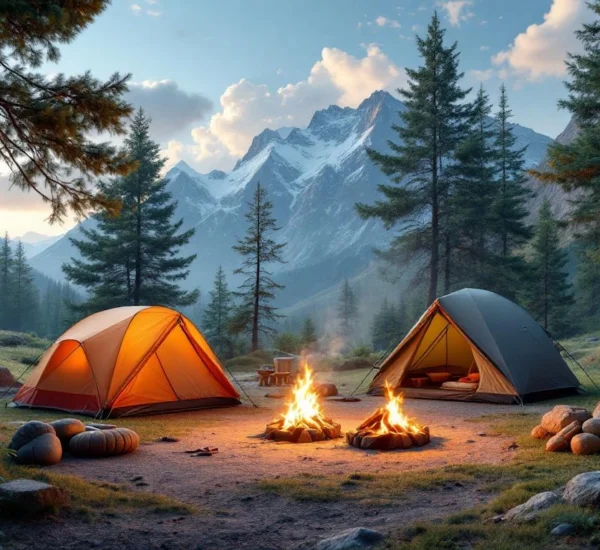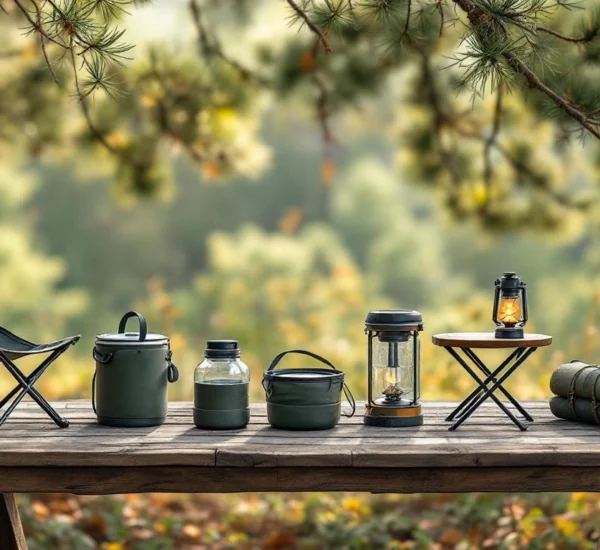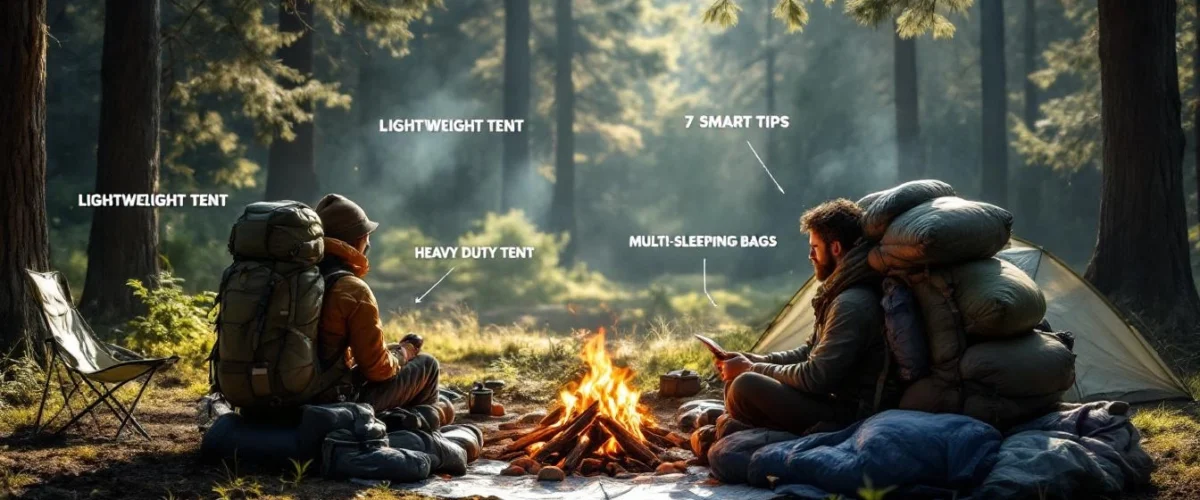
Picture two campsites. At one, a solo hiker pulls a tiny stove from a pocket and pitches a low tarp in minutes. At the other, someone unloads a folding table, cast-iron pan, thick air mattress, and a cooler big enough for the weekend. That contrast is the real difference between ultralight and heavy camping—and it shapes how far you can go, how comfortable you’ll feel, and how much effort the trip will require. In the broader debate of Minimalist vs traditional camping, there isn’t a winner. There’s only what fits your terrain, weather, group, and energy. Below, you’ll find seven smart, field-tested ways to decide which approach works for your next trip.
Table of Contents
- Gear Weight Philosophy: What You’re Really Carrying
- Camp Comfort vs Mobility: What Matters on Your Trip
- Cost, Durability & Long-Term Value
- Safety, Risk Tolerance & Weather Exposure
- Trip Type, Terrain & Access Rules
- Who You’re Camping With Changes Everything
- 7 Smart Tips to Decide Fast
Gear Weight Philosophy: What You’re Really Carrying
At its core, the difference between ultralight and heavy camping comes down to mindset. One approach asks, “Can I carry this comfortably for miles?” The other asks, “Will this make camp more enjoyable?” Neither is wrong—but they lead to very different packing lists.
Defining the difference between ultralight and heavy camping in practical terms
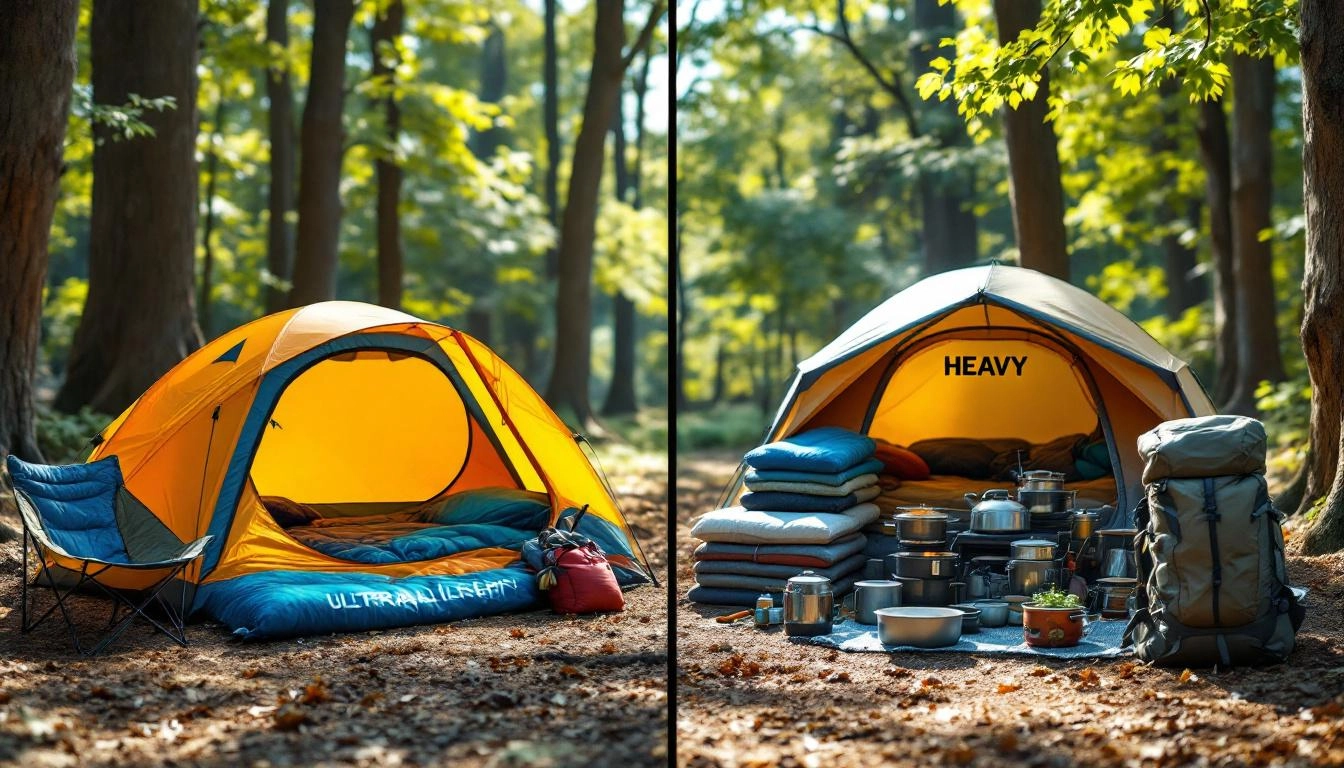
Ultralight camping revolves around base weight—the gear in your pack before food and water. Campers choose items that serve multiple purposes, trim duplicates, and accept fewer “extras.”
Heavy or traditional camping focuses on comfort. Think roomy tents, thick sleeping pads, two-burner stoves, and seating with real back support. You’re less concerned about ounces and more about how camp feels after sundown.
Try this: lay out everything you plan to bring. Pack it. Lift it. Then imagine carrying it uphill for an extended stretch. Your body will tell you which philosophy you’re really following.
Minimalist vs traditional camping gear choices side by side
In a detailed ultralight vs conventional backpacking comparison, the differences show up quickly:
- Shelter: Tarp or compact backpacking tent vs. tall multi-person tent.
- Sleep system: Lightweight pad and quilt vs. thick air mattress or cot.
- Kitchen: Small canister stove and mug vs. full cookware, cooler, and table.
The trade-off is clear. Lighter gear improves mobility but may feel less forgiving. Heavier equipment takes up space and effort but adds comfort and redundancy.
Quick decision rule: distance from vehicle or trailhead
If you’ll be carrying your gear a meaningful distance from your vehicle, your packing mindset should shift immediately. The farther you go under your own power, the more each added item matters.
A common mistake is packing “just in case” items—extra shoes, multiple cooking gadgets, backup lanterns—that never leave the bin. If you’re hiking in, hesitate before adding anything you can’t justify using daily, especially when applying principles from ultralight vs conventional backpacking strategies.
Camp Comfort vs Mobility: What Matters on Your Trip
Comfort and mobility sit on opposite ends of the same equation. You rarely maximize both.
Comfort upgrades in traditional/heavy setups
Chairs with armrests. Cots you can sit up on. Large coolers with fresh food instead of dehydrated meals. These upgrades change how your body recovers.
On relaxed weekend trips, especially at established campgrounds, that comfort helps. Better sleep often means better mood and more energy for hikes or fishing the next day.
Freedom and range with ultralight setups
With ultralight camping gear, you gain flexibility. You can move farther, choose smaller campsites, and adjust plans if weather shifts. If a trail is steeper than expected, your lighter pack becomes a real advantage—not a talking point.
The trade-off? Thinner padding, smaller shelter space, and fewer camp luxuries.
How to choose based on trip length and daily activity level
Ask one direct question: Will you spend more time in camp or moving?
- If it’s mostly hiking, traveling, or covering distance—lean lighter.
- If it’s relaxing, cooking, and hanging around camp—lean heavier.
A short, single-night trip close to the car can justify comfort. A multi-day loop with elevation gain rewards minimalism, a core theme in minimalist vs traditional camping decisions.
Cost, Durability & Long-Term Value
Why ultralight gear often costs more upfront
Lighter gear typically uses advanced materials and specialized designs to shave weight. That often means a higher price tag. You’re paying for efficiency and portability.
Before upgrading, consider whether you truly need that weight savings for the trips you take.
Heavy gear’s durability trade-offs
Traditional camping equipment is often rugged and forgiving. For families with kids or pets, durability can matter more than grams. Larger tents withstand frequent setups. Thicker chairs handle daily wear.
If your camping style includes frequent car access and established sites, durability per dollar may favor heavier equipment.
Budget pathway: how to transition gradually
If you’re curious about a lighter approach, start by replacing your heaviest items first—often shelter and sleep system. Don’t overhaul everything at once. Test each change on short trips.
Avoid buying duplicate gear until you’re confident which style fits you long term.
Safety, Risk Tolerance & Weather Exposure
Exposure realities in ultralight camping
Ultralight setups sometimes mean smaller shelters and fewer backup items. That’s fine—if you’re skilled and conditions are stable.
Before heading out, check an official forecast from the National Weather Service. If storms or temperature swings are expected, make sure your shelter and insulation match the risk.
Managing food, wildlife & storage rules
Food storage rules vary by park and region. Some require specific containers or designated storage systems. Confirm current regulations through official sources like the National Park Service camping guidelines or relevant park pages.
Regardless of style, follow Leave No Trace principles to reduce wildlife impact and protect campsites (Leave No Trace Seven Principles).
Matching your skill level to your setup
Beginners often benefit from the margin of error that traditional camping equipment provides—roomier tents, thicker insulation, familiar cooking setups.
One common mistake is copying extreme ultralight gear lists online without field testing. Skills should match simplicity. Start safe, then refine.
Trip Type, Terrain & Access Rules
Car camping vs backcountry permits
Car camping typically allows more equipment because your vehicle carries the load. Backcountry trips usually require packing everything in and out, sometimes with permit systems and site quotas.
Always confirm current regulations and reservation requirements through official platforms such as Recreation.gov or the relevant park authority before you plan your setup.
Terrain impact (mountain, forest, coastal, desert)
Steep elevation gain favors lighter packs. Wet climates may call for sturdier shelters and reliable rain protection. Coastal wind can test minimalist tarps. Desert sun demands thoughtful shade and water planning.
Check recent trail condition reports and adapt. Terrain often makes the decision for you.
Who You’re Camping With Changes Everything
Solo ultralight vs family traditional camping
Solo hikers can tailor every item. Families share gear—but also share comfort complaints.
Children typically tolerate discomfort less. Extra padding or reliable meal setups can turn a stressful trip into a positive memory.
Pets, older adults & accessibility concerns
Heavier setups—cots, stable seating, spacious tents—may better support older adults or campers with mobility concerns. Pets also require space and durable gear.
There’s always a balance between inclusivity and mobility. Choose the style that keeps everyone safe and comfortable enough to enjoy the trip.
7 Smart Tips to Decide Fast
- Start with your route, not your gear. Distance and terrain dictate weight limits.
- Match shelter size to weather risk. More exposure calls for more protection.
- Weigh your pack before finalizing. Use a real scale and adjust accordingly.
- Cut duplicates—keep one reliable backup. Redundancy is good; excess is not.
- Prioritize sleep quality over luxury extras. Good rest improves everything.
- Test your setup on a short overnight first. Discover problems close to home.
- Adjust after every trip. Write down what you didn’t use and reconsider it next time.
Checklist
- Clarify trip type (car camping, hike-in, multi-day loop).
- Check official park or site regulations.
- Review the weather forecast from an authoritative source.
- Weigh your full kit.
- Identify top three non-negotiables (comfort or mobility).
- Remove two “maybe” items you’re unlikely to use.
Common Mistakes
- Confusing expensive gear with necessary gear.
- Copying extreme ultralight lists without sufficient experience.
- Bringing a full kitchen for a single-night trip.
- Ignoring campsite rules on food storage.
- Failing to test new gear before heading into remote areas.
Frequently Asked Questions
What is the real difference between ultralight and heavy camping for beginners?
The difference between ultralight and heavy camping for beginners is primarily about weight tolerance and comfort expectations. Ultralight emphasizes carrying less and moving farther, while heavy camping focuses on bringing more comforts and relying less on physical endurance.
Is Minimalist vs traditional camping better for family trips?
In most cases, traditional camping works better for families because comfort, food variety, and sleep quality matter more with children. However, short hike-in trips can still work with a simplified but not extreme minimalist approach.
Does ultralight camping sacrifice too much comfort?
It can, depending on your expectations. Many ultralight campers accept simpler meals and thinner pads in exchange for mobility. If better sleep dramatically affects your mood or safety, don’t compromise there.
Which style is safer in bad weather?
Safety depends more on preparation than style. Heavier setups may offer more shelter space and insulation, but a well-chosen ultralight kit matched carefully to forecast conditions can also be safe. Always check official weather forecasts before committing.
Is heavy camping more affordable in the long run?
Traditional camping equipment can be more budget-friendly initially and often durable for car-based trips. Long-term cost depends on how often you replace or upgrade gear.
How do I transition from traditional to ultralight camping without replacing all my gear?
Replace the heaviest single item first, test it, then reassess. Gradual changes are more cost-effective and help you avoid buying gear that doesn’t match your actual camping style.
Conclusion
The difference between ultralight and heavy camping isn’t about which style is superior. It’s about priorities—mobility versus comfort, simplicity versus amenities. Start with your route, your weather window, and who’s joining you. Test one major adjustment on your next trip, then refine from experience. When you treat each outing as feedback, you’ll naturally find the right balance between carrying less and enjoying more.