Table of Contents
- Choosing the Right Campsite for Seniors
- Essential Senior Camping Tips for Comfort
- Health and Safety While Camping for Seniors
- Packing Smart Gear for Senior Campers
- Travel and Mobility Tips for Senior Camping Trips
Choosing the Right Campsite for Seniors
One of the most important senior camping tips is to start with the right location. The campsite you choose sets the tone for your entire trip and can make a big difference in comfort and safety when camping for seniors.
Accessibility and campsite amenities to prioritize
Look for campgrounds designed with accessibility in mind. Features like paved paths, level campsites, nearby restrooms, and accessible showers reduce physical strain and increase independence. Many public parks openly list their accessibility features. The National Park Service Accessibility guide is a reliable resource for finding senior-friendly sites.
- Flush toilets and running water
- Electrical hookups for medical devices or CPAP machines
- Benches, picnic tables, and shaded areas
- Short walking distances to key amenities
Campgrounds best suited for camping for seniors (RV vs. tent)
When it comes to camping for seniors, comfort often trumps minimalism. RV camping offers climate control, proper beds, and easy access to kitchens and bathrooms. Tent camping can still work well, especially in established campgrounds with level pads and nearby facilities. Choose the option that aligns with your mobility, health needs, and personal comfort level.
Climate, terrain, and seasonal considerations
Weather and terrain matter more as we age. Mild temperatures, low humidity, and flat terrain reduce fatigue and health risks. Shoulder seasons like spring and fall are ideal. For RV travelers, explore our guide on Best RV Parks for Older Adults to find locations specifically tailored to senior travelers.
Essential Senior Camping Tips for Comfort
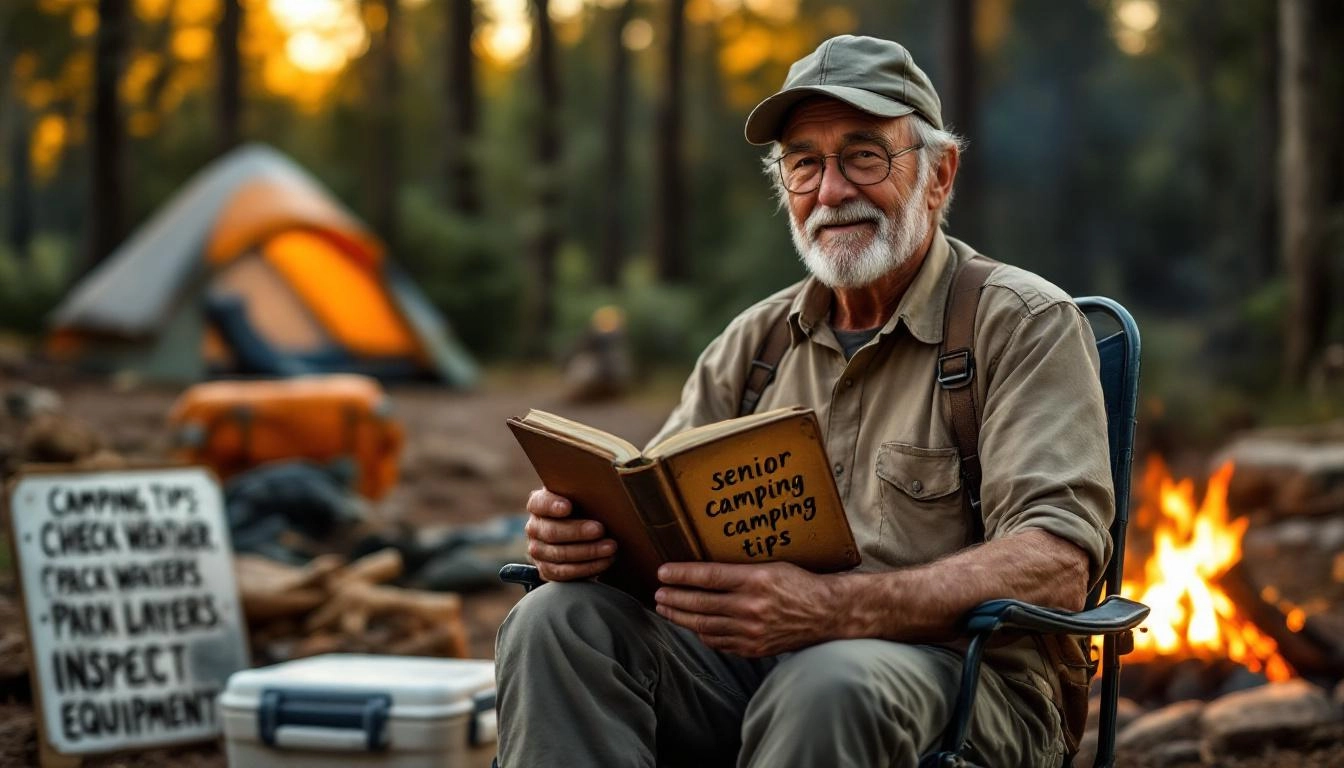
Comfort is at the heart of enjoyable camping for seniors. These practical senior camping tips focus on rest, warmth, and simple habits that make outdoor living easier.
Sleeping solutions for better rest outdoors
A good night’s sleep can make or break your trip. Invest in supportive sleeping gear that protects joints and backs.
- High-quality air mattresses or memory-foam sleeping pads
- Cots to elevate you off the ground
- Extra pillows and familiar bedding from home
Clothing and layering tips for varying weather
Layering is one of the simplest senior camping tips. Choose breathable base layers, insulating mid-layers, and waterproof outerwear. Easy-to-put-on clothing with zippers or Velcro closures also makes dressing more comfortable, especially on chilly mornings.
Simple routines that make camping for seniors enjoyable
Keeping routines similar to home reduces stress. Enjoy morning walks, scheduled meals, and consistent bedtime rituals. For a handy checklist, visit our Outdoor Comfort Essentials Checklist to ensure nothing important is forgotten.
Health and Safety While Camping for Seniors
Camping safety for seniors starts with preparation. These senior camping tips help you protect your health while still embracing adventure.
Managing medications and medical needs outdoors
Always bring more medication than you need and store it properly. Use a labeled pill organizer and set reminders on your phone or watch. Carry a written list of medications and emergency contacts in case help is needed.
Preventing common injuries and fatigue
Fatigue increases the risk of falls and strains. Pace your activities, take frequent breaks, and stay hydrated. The CDC Healthy Travel Guidelines offer helpful advice that applies directly to camping for seniors.
Emergency preparedness tips specifically for seniors
Emergency planning is one of the most overlooked senior camping tips. Pack a well-stocked first-aid kit, keep a flashlight within reach, and inform someone at home of your itinerary. Knowing your limits and acting early when something feels off is key to staying safe.
Packing Smart Gear for Senior Campers
The right equipment transforms camping for seniors from challenging to enjoyable. Focus on senior-friendly camping gear that emphasizes safety, simplicity, and comfort.
Must-have gear that improves comfort and safety
- Supportive camp chairs with armrests
- Portable lighting and headlamps
- Non-slip mats for tents or RV entrances
Lightweight and ergonomic equipment recommendations
Choose items designed to reduce strain, such as lightweight cookware and telescoping tools. Reliable product testing from Consumer Reports Outdoor Gear can help you make informed decisions.
Assistive tools that make camping for seniors easier
Assistive devices can be game-changers. Walking poles, raised toilet seats, and easy-grip utensils are worth considering. Explore more ideas in our Senior-Friendly Camping Gear Guide.
Travel and Mobility Tips for Senior Camping Trips
Getting to the campsite comfortably is just as important as the stay itself. These senior camping tips focus on travel planning and mobility.
Planning shorter trips and rest-focused itineraries
Shorter camping trips reduce fatigue and allow you to test new gear and routines. Build in rest days and avoid overpacking your schedule.
Tips for driving, RV travel, and frequent breaks
Plan routes with rest stops every 1–2 hours. Adjust seats for proper posture and avoid driving at night when visibility is lower. For more ideas, see our Road Trip Planning for Retirees.
Camping for seniors with limited mobility or joint pain
Accessible campsites, adaptive gear, and help from travel companions can make all the difference. Don’t hesitate to ask campground staff about accommodations—they’re often happy to help.
Frequently Asked Questions
What are the most important senior camping tips for beginners?
Start with short trips, choose accessible campgrounds, pack comfort-focused gear, and prioritize safety. These senior camping tips help you build confidence gradually.
Is camping for seniors safe with health conditions?
Yes, with proper planning. Talk to your doctor beforehand, manage medications carefully, and choose campgrounds with medical access nearby.
How can seniors stay comfortable while camping overnight?
Use supportive sleeping systems, dress in layers, and maintain familiar bedtime routines to improve sleep quality.
What type of campground is best for camping for seniors?
Established campgrounds with amenities, level terrain, and accessible facilities are usually the best choice.
How do senior camping tips differ for tent camping vs. RV camping?
RV camping emphasizes convenience and mobility support, while tent camping requires more focus on sleeping comfort and weather protection.
Conclusion
With thoughtful preparation, camping for seniors can be one of the most enriching ways to enjoy the outdoors. By following these proven senior camping tips, you reduce risk, increase comfort, and gain the confidence to explore new destinations at your own pace. Whether you’re planning a weekend getaway or a longer adventure, the right campsite, gear, and routines make all the difference. Start small, pack smart, and listen to your body. Use these senior camping tips as a roadmap, then take the next step—plan your next trip, review your gear, or explore our related guides to make your outdoor experiences safer, more comfortable, and more rewarding.