Table of Contents
- Why Ultralight Matters
- Core Principles of Minimalist Camping
- The 10 Proven Essentials
- How to Customize Your Setup
- Safety & Seasonal Considerations
- Budget-Friendly Ultralight Tips
- Checklist
- Common Mistakes
- Frequently Asked Questions
- Conclusion
Why Ultralight Matters
Going ultralight isn’t about owning the most expensive gear—it’s about being intentional. Every ounce saved helps you hike farther, recover faster, and enjoy the scenery more.
Weight vs. comfort trade-offs explained
The biggest misconception is that less weight means less comfort. In reality, lighter gear often improves comfort by reducing joint strain and fatigue. A streamlined pack also moves better over technical terrain.
How an ultralight camping checklist prevents overpacking
A structured ultralight camping checklist keeps your decisions objective. Instead of packing for every hypothetical scenario, you pack only what you’ve tested and know you’ll use. This habit prevents redundancy and keeps your base weight predictable. If you need a proven reference, see this detailed 2026 ultralight camping checklist.
Ideal base weight ranges for beginners
Beginner-friendly targets:
- Lightweight: 20–30 lbs base weight
- Ultralight: 10–20 lbs
- Super-ultralight: under 10 lbs (advanced and situational)
Most newcomers find the 12–18 lb range comfortable and safe. For more technique tips, see [Lightweight backpacking basics] or REI’s advice at REI Ultralight Backpacking.
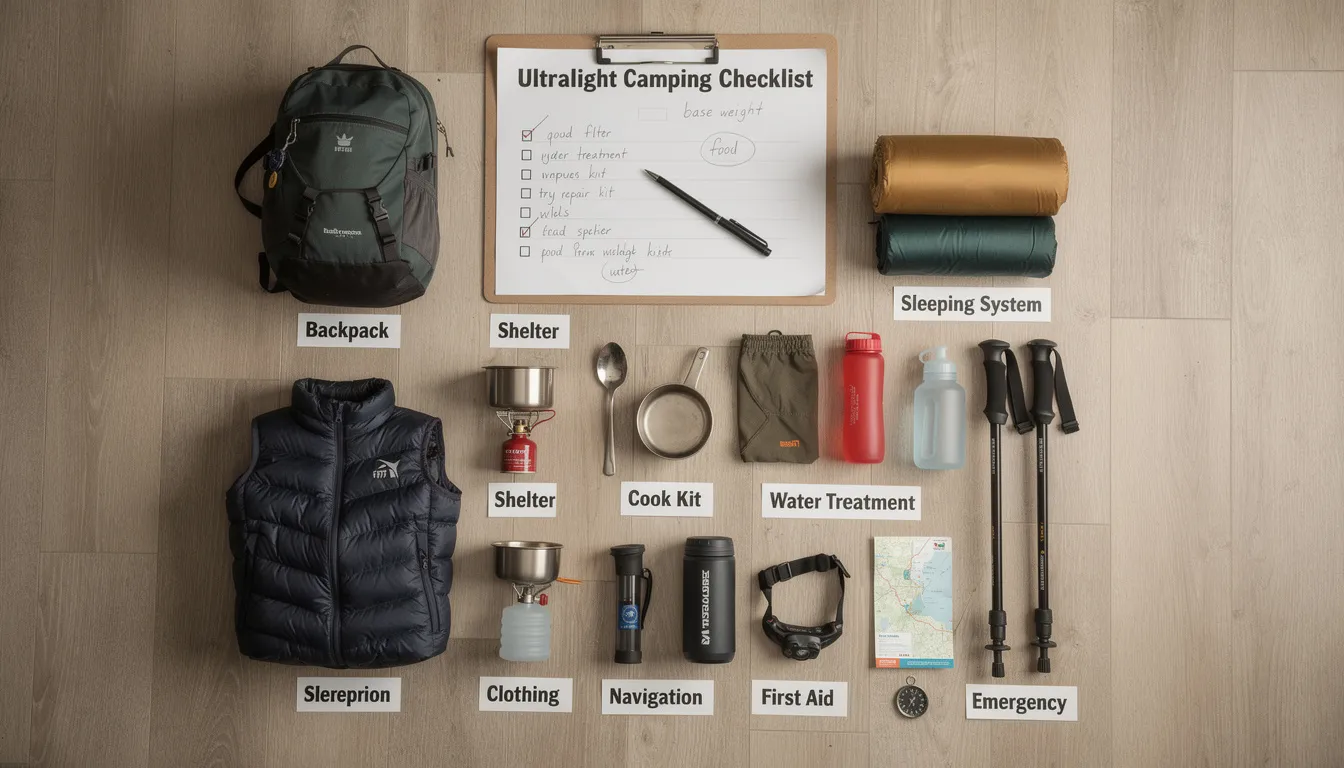
Core Principles of Minimalist Camping
The heart of Minimalist camping essentials is practicality. You choose items that serve real needs, not hypothetical comfort fantasies.
Applying Minimalist camping essentials to real trips
Start with environments you understand. For example, a desert overnight requires water capacity but may not require heavy insulation. In a wet climate, pack extra dry layers but trim bulk from sleep and cook gear.
The “one item, multiple uses” approach
Multipurpose gear saves the most weight. A bandana becomes a pot holder, head wrap, coffee filter, or sunshade. Trekking poles become tent supports. Your stuff sack becomes a pillow with spare clothes inside.
Deciding what’s essential vs. optional
Ask: “Does this item keep me alive, warm, dry, fed, or navigated?” If the answer is no, it’s optional. Use frameworks from Leave No Trace to guide safe and low‑impact packing choices.
The 10 Proven Essentials
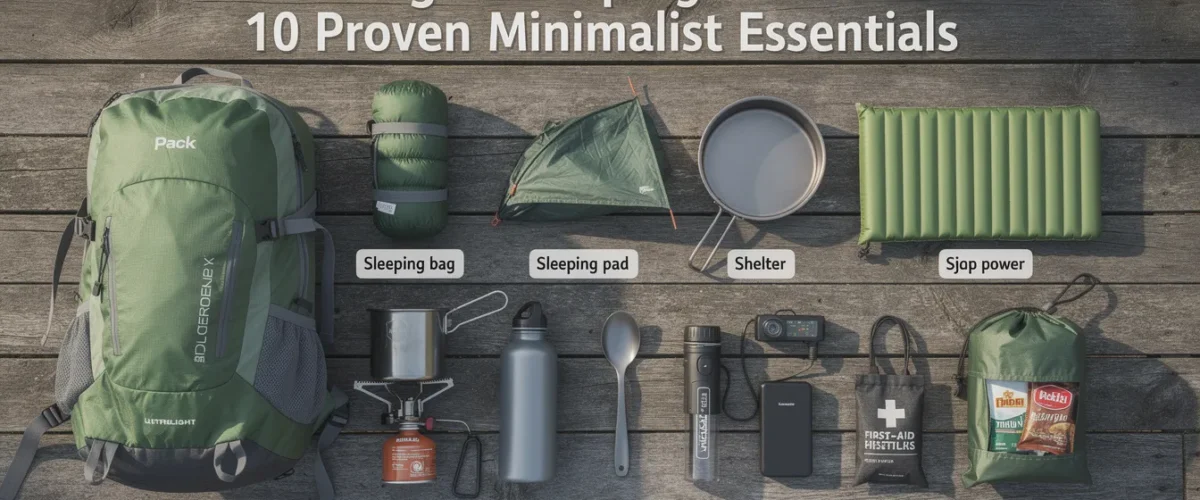
This is the core gear set every ultralight backpacker relies on. Each category includes comparisons and safety notes.
Shelter systems
Your shelter is one of the “big three” weight savers. Popular choices:
- Tarp shelters: lowest weight; require good site selection.
- Trekking-pole tents: excellent balance of stability and weight; ideal for most beginners.
- Ultralight freestanding tents: easiest setup, slightly heavier.
For deeper comparisons, see [Ultralight shelter guide] or technical breakdowns on BackpackingLight.
Sleep system (quilt, pad, insulation choice)
Switching from a sleeping bag to a down quilt saves weight and increases adaptability. Key components:
- Quilt: rated to the coldest likely overnight temperature.
- Sleeping pad: R-value around 3 for three-season trips.
- Clothing insulation: mid-layer + beanie for shoulder seasons.
Cook system and water treatment
Most ultralight hikers use:
- Alcohol stove or canister stove
- 750–900 mL titanium pot
- Water filter (squeeze filters are popular)
Always carry a backup purification method, such as tablets. This provides safety without adding bulk.
How to Customize Your Setup
No two trips require the same packing list. Terrain, weather, and trip length matter.
Adjusting for terrain and climate
Rocky or windy areas demand secure shelter systems. Forested terrain allows simpler tarp pitching. In cold weather, increase your insulation profile instead of adding redundant layers.
Swapping items depending on trip duration
Short trips let you bring minimal food, smaller fuel canisters, and lighter water capacity. Multi-day treks may require sturdier footwear or extra repair supplies.
Personal preference vs. minimalism
Minimalism isn’t suffering—it’s being intentional. If you truly use a comfort item (like a small pillow), keep it and trim elsewhere. See [Seasonal camping gear list] for guidance.
Safety & Seasonal Considerations
Lightweight doesn’t mean reckless. Plan for environmental hazards to stay safe on trail.
Weather awareness and backup essentials
Always check forecasts and pack at least one emergency insulation piece. A space blanket or ultralight bivy adds safety for minimal weight.
Navigation: maps, digital tools, offline backups
Offline maps are non‑negotiable. Use tools like paper maps, a marked compass, or digital backups (Hillmap or Gaia). Keep batteries warm in cold weather.
Regulations for fires, food storage, and wildlife
Different parks require specific food storage systems. Review requirements at the National Park Service site before packing.
Budget-Friendly Ultralight Tips
Going lighter doesn’t mean going broke. A few strategic swaps save more weight than a full gear overhaul.
Buying used vs. renting vs. new
Used gear shops and online forums often carry high-end tents and quilts at half price. Renting lets you test before committing.
High-impact items worth the upgrade
Spend money on your “big three”: shelter, sleep system, and pack. These deliver the largest weight reductions per dollar spent.
DIY ultralight hacks for common gear
- Cut toothbrush handles.
- Use mini dropper bottles for soap and fuel.
- Replace steel tent stakes with aluminum or titanium.
For more tips, see [Budget camping tips]. You can also compare ideas with this comprehensive ultralight camping checklist resource to guide upgrades.
Checklist
- Ultralight shelter (tarp or trekking‑pole tent)
- Quilt and sleeping pad
- Stove and titanium cook kit
- Water filter + backup tablets
- Compact first-aid kit
- Weather-appropriate clothing layers
- Navigation tools (map, compass, offline phone app)
- Food + required bear storage
- Micro-repair kit (tape, patch kit, cord)
- Compact hygiene kit (soap, toothbrush, wipes)
Common Mistakes
- Overpacking “just in case” items
- Carrying multiple knives or redundant layers
- Ignoring local food storage regulations
- Leaving behind basic safety items
- Not testing new gear before hiking
Frequently Asked Questions
What should an ultralight camping checklist include for a beginner?
Start with your shelter, sleep system, minimal cook kit, water treatment, navigation tools, and seasonal clothing. As you gain experience, trim redundancy and refine weight targets.
How do I choose Minimalist camping essentials without compromising safety?
Identify items that protect you from exposure, dehydration, and navigation errors. Replace heavy versions with lighter alternatives only when they perform the same function reliably.
What’s a realistic base weight goal for an ultralight trip?
Most beginners aim for 12–18 lbs. With experience, many hikers reach the 10–12 lb range comfortably.
Is ultralight gear always expensive, and how can I save money?
No. Many hikers reach ultralight levels by cutting redundant items, buying used gear, or upgrading only the high-impact categories.
How do I adapt an ultralight camping checklist for cold-weather trips?
Increase insulation layers, choose a higher R‑value pad, bring a warmer quilt, and strengthen your shelter’s storm worthiness. Don’t trim safety items in freezing conditions.
Are Minimalist camping essentials different for thru-hiking vs. weekend trips?
Thru-hikes require more durable gear and stronger repair kits. Weekend trips let you push lighter boundaries because exposure time is shorter.
What mistakes do first-time ultralight campers usually make?
Most pack unnecessary backups, skip weather planning, or fail to practice gear setups before hitting the trail.
Conclusion
Packing intentionally is the key to a smooth, enjoyable trip. By focusing on proven Minimalist camping essentials and following a reliable ultralight camping checklist, you avoid the most common weight traps without sacrificing safety or comfort. Dial in your gear through trip testing, refine your loadout over time, and keep safety at the center of every decision. For deeper guidance, explore our shelter guide, seasonal packing resources, and budget tips to continue improving your setup and confidence on trail. You can also reference our complete ultralight camping checklist as you refine your pack.