Table of Contents
- Why Minimalist Camping Matters
- Essential Gear Priorities
- Shelter & Sleep Systems
- Food, Water & Cooking
- Clothing & Weather Preparedness
- Safety, Navigation & Tools
- The 7 Stunning Tips for Beginners
- Checklist
- Common Mistakes
- Frequently Asked Questions
- Conclusion
Why Minimalist Camping Matters
Minimalist camping focuses on bringing only what you need—nothing more. For new campers, traveling lighter reduces physical strain and makes the experience less intimidating. It’s also a great way to learn what gear actually matters.
Benefits of keeping your pack light
When your pack is light, you move comfortably, balance better on uneven terrain, and reduce fatigue. A smaller load also lowers your risk of injuries like knee or ankle strain.
How Minimalist camping for beginners differs from traditional setups
Traditional car camping encourages bringing everything “just in case.” In contrast, Minimalist camping for beginners teaches restraint. You choose multi-use items, prioritize essentials, and learn to make smart trade-offs rather than overpacking.
Start learning with trusted resources
For deeper foundational skills, explore beginner-friendly guidance like [How to Start Camping as a Beginner].
Essential Gear Priorities
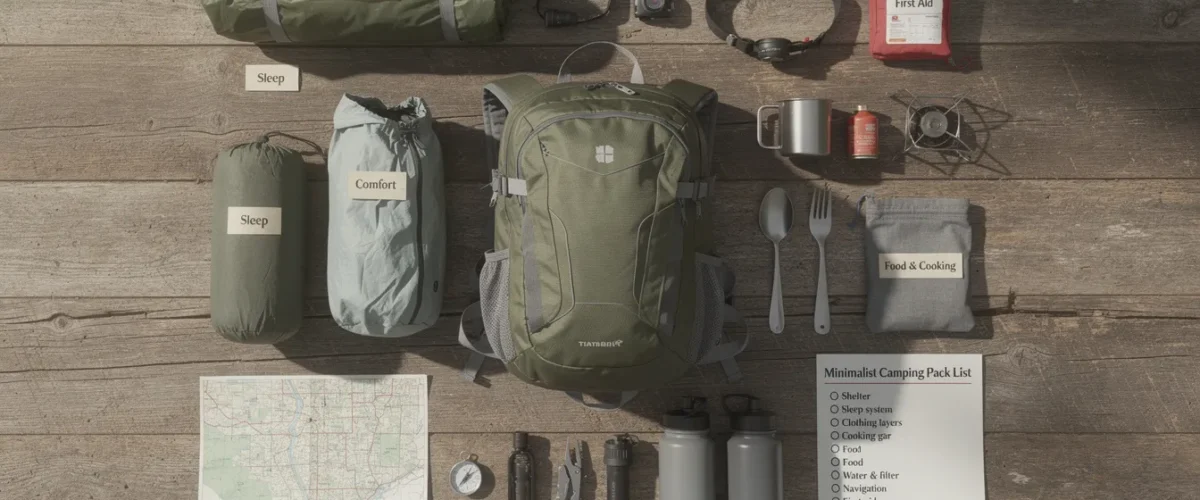
This is where most people ask: what to pack for minimalist camping without leaving out something important? The answer starts with understanding priorities—not buying more gear.
How to evaluate “must-have vs nice-to-have” items
Use this rule: if an item doesn’t provide shelter, safety, warmth, hydration, or calories, it’s usually not essential. Items offering comfort without weight penalties are acceptable but optional.
Weight-saving principles
Choose gear that works in multiple scenarios. A buff doubles as a sun shield, towel, or headband. A titanium mug can act as both pot and bowl. Every item should earn its place.
Budget-friendly swaps for new campers
You don’t need expensive ultralight gear. Prioritize durability and fit. Renting or borrowing is a smart way to try equipment before investing. For comparisons and education, see the REI lightweight gear guides.
Shelter & Sleep Systems
Your shelter and sleep setup form the “big three”: shelter, sleeping bag, and sleeping pad. These are usually the heaviest items, so smart choices matter.
Minimalist shelter options
Tarps are light and adaptable. Bivy sacks are compact and weather-resistant but less spacious. Ultralight tents provide the most comfort and bug protection while still keeping weight low.
Choosing sleep pads and bags
Always match your bag’s temperature rating to the lowest expected overnight temperature. A reliable sleep pad adds insulation and comfort—essential for preventing heat loss from the ground.
Quick setup strategies
Practice pitching your shelter at home so you can set up camp in minutes, even in poor weather. For more insights, see [Ultralight Tents Guide].
Food, Water & Cooking
Simple food and smart hydration planning allow you to carry less while still staying fueled.
Compact cooking gear
A small canister stove, pot, and windscreen cover the basics. You can also opt for cold meals to eliminate fuel weight entirely.
Water purification basics
Bring a water filter and a backup purification method such as tablets. Learn local water availability before your trip. For safe practices, review the Parks Canada safety guidelines.
No-cook and low-fuel meal ideas
Choose calorie-dense foods like tortillas, nut butters, dried fruit, instant noodles, and couscous. They prepare quickly and pack efficiently.
Clothing & Weather Preparedness
Packing the right clothing prevents discomfort and reduces risk in changing weather.
Lightweight layering systems
Use a simple layering setup: a moisture-wicking base, lightweight midlayer, and weatherproof shell. Avoid cotton—it traps moisture and chills your body when temperatures dip.
Rain and wind protection essentials
A compact rain jacket and windproof layer dramatically improve comfort while adding minimal weight. Even fair-weather trips benefit from these items.
Seasonal considerations
Summer requires sun protection and breathable fabrics. Shoulder seasons demand warmth, extra insulation, and careful monitoring of overnight lows.
Safety, Navigation & Tools
Minimalism stops where safety begins. These items are non-negotiable, even on short trips.
Essential safety gear
- Compact first-aid kit
- Headlamp with spare batteries
- Reliable fire starter
Navigation essentials
Carry a map and compass even if you use offline navigation apps. Apps fail; physical tools don’t.
When ultralight becomes unsafe
Never remove items that protect you from exposure, dehydration, or injury. Minimalism means efficiency, not risky cutting of essentials. For foundational principles, review the Leave No Trace Center.
The 7 Stunning Tips for Beginners
Tip 1 — Start with a short overnight
Test your gear list before committing to longer trips.
Tip 2 — Pre-pack using the “big three first” method
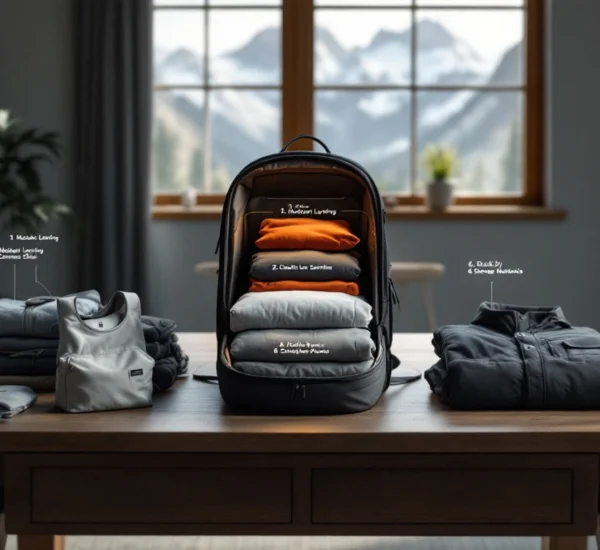
Place shelter, sleeping bag, and pad in your pack first, then add smaller essentials around them.
Tip 3 — Use multipurpose gear
Every item should serve more than one function whenever possible.
Tip 4 — Follow the “one luxury item” rule
Pick one comfort item, such as a lightweight camp pillow or cozy socks, and leave the rest.
Tip 5 — Keep food simple
Choose meals with minimal prep and fuel needs.
Tip 6 — Track pack weight
Weigh your pack before and after each trip. Note which items you used and which you didn’t.
Tip 7 — Practice at home first
Set up your shelter, test your stove, and pack your bag before hitting the trail.
Checklist
- Lightweight pack + shelter (tarp, tent, or bivy)
- Sleeping pad + temperature-appropriate bag
- Compact stove or no-cook food kit
- Water filter + backup purification
- Layered clothing system + rain protection
- Navigation tools + headlamp + first aid
- Small repair kit
Common Mistakes
- Overpacking “just in case” items
- Bringing bulky gear that lacks a clear purpose
- Ignoring weather forecasts
- Underestimating water needs
- Starting with trips that are too long or remote
Frequently Asked Questions
What to pack for minimalist camping if I’m a complete beginner?
Start with shelter, sleep system, navigation, hydration, food, and basic safety gear. These form the core essentials for any trip.
How does Minimalist camping for beginners differ from ultralight backpacking?
Ultralight backpacking focuses on extreme weight reduction, often with specialized gear. Minimalist camping emphasizes simplicity, practicality, and learning what works.
What is the safest lightweight shelter setup for new minimalist campers?
A small, freestanding ultralight tent offers excellent weather protection and easy setup.
How do I reduce pack weight without buying expensive gear?
Choose multipurpose items, remove non-essentials, and borrow or rent before purchasing.
What food works best for minimalist camping?
Instant meals, tortillas, nut butters, jerky, couscous, and dehydrated meals pack small and fuel well.
Can minimalist camping be safe in cold weather?
Yes—if you bring a bag rated for the temperature, proper layers, and a warm sleep pad.
How can I practice packing before my first trip?
Lay everything out at home, pack it, unpack it, and adjust until it feels manageable.
Conclusion
Learning what to pack for minimalist camping becomes easier each time you head outdoors. Start with the essentials, keep safety first, and allow your packing skills to evolve through experience. Minimalist camping for beginners isn’t about having the lightest pack—it’s about choosing gear that makes your trip smoother, safer, and more rewarding. If you’re ready for your next step, explore related guides like [Campsite Setup Tips] and continue building your outdoor confidence.